For business
Beef trimmings 70/30, 80/20 and 90/10: what the numbers mean and which to use for burgers, sausages and dumplings
The numbers on beef trimmings are the lean-to-fat split. How 70/30, 80/20 and 90/10 affect juiciness, shrinkage and cost, and how to blend 90/10 with 70/30.
5 min read · updated · MYASYA team
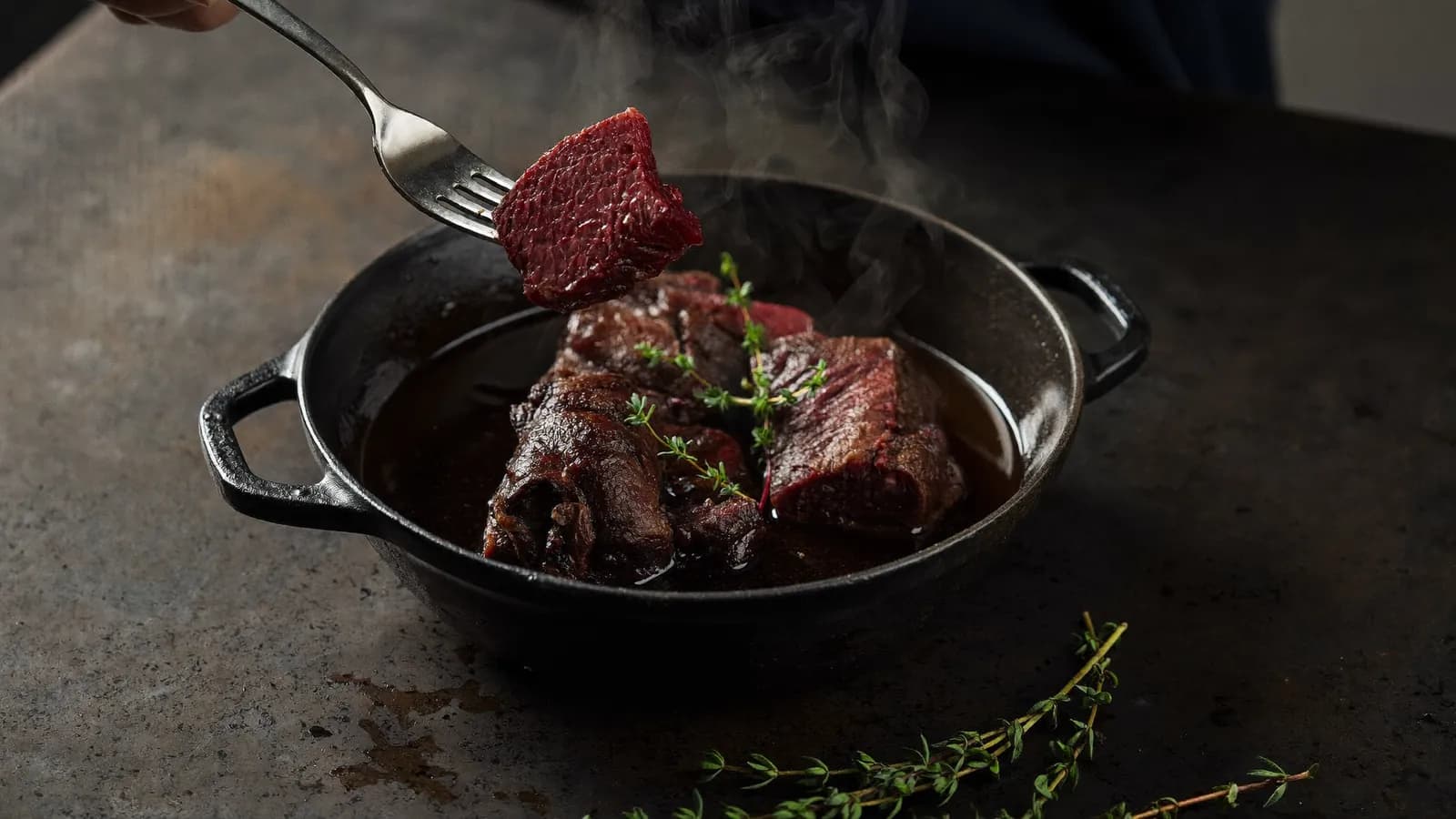
Beef trimmings 70/30 are trim that is roughly 70% lean meat and 30% fat. By the same logic, 80/20 has about 20% fat and 90/10 about 10%. The first number is always the lean share, the second is fat, and it is the fat figure that decides how the mince turns out: 80/20 is the classic burger grind, 90/10 is the lean base for sausages and blends, and 70/30 is the fat component used to fine-tune a recipe and bring down the cost of a batch.
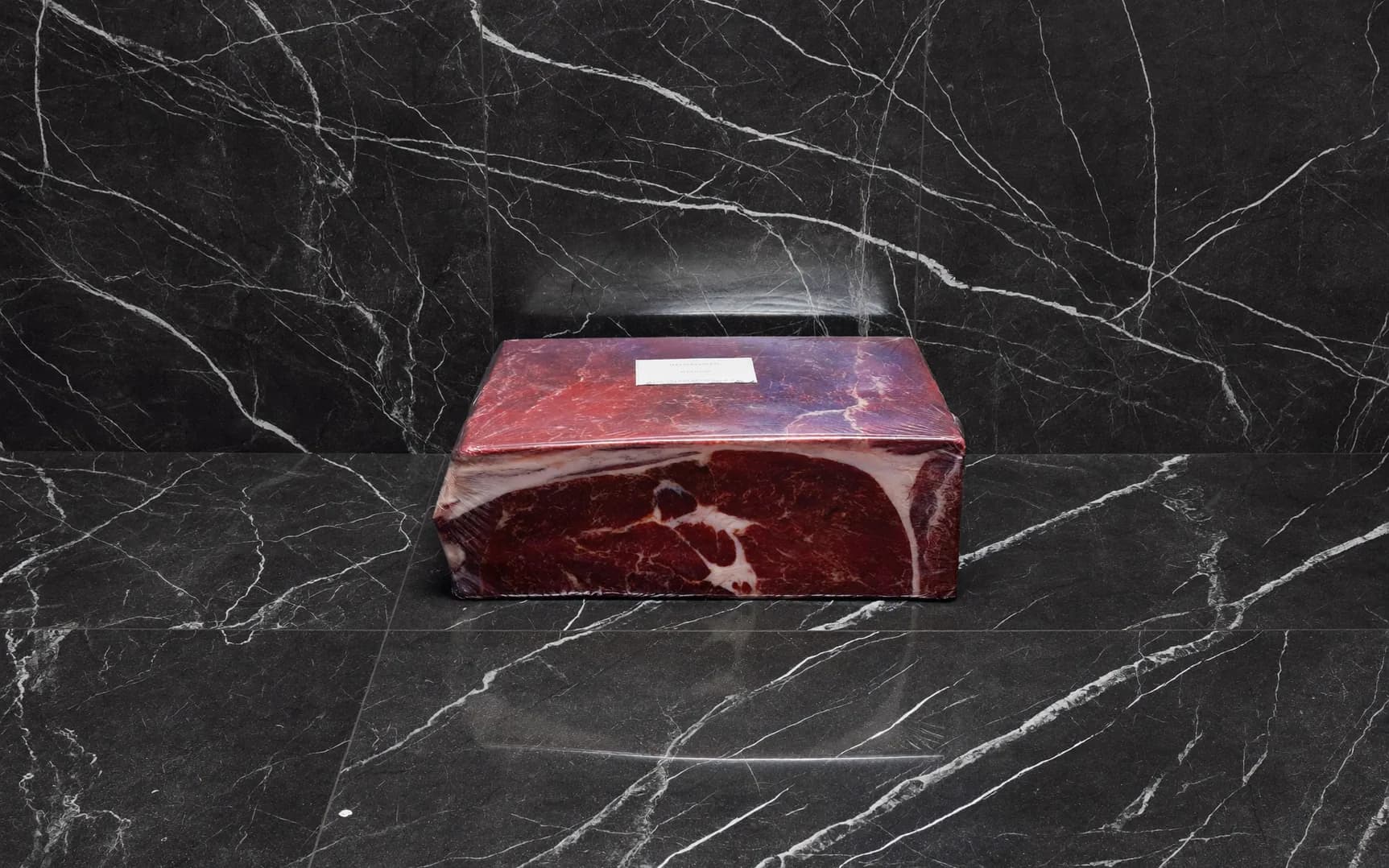
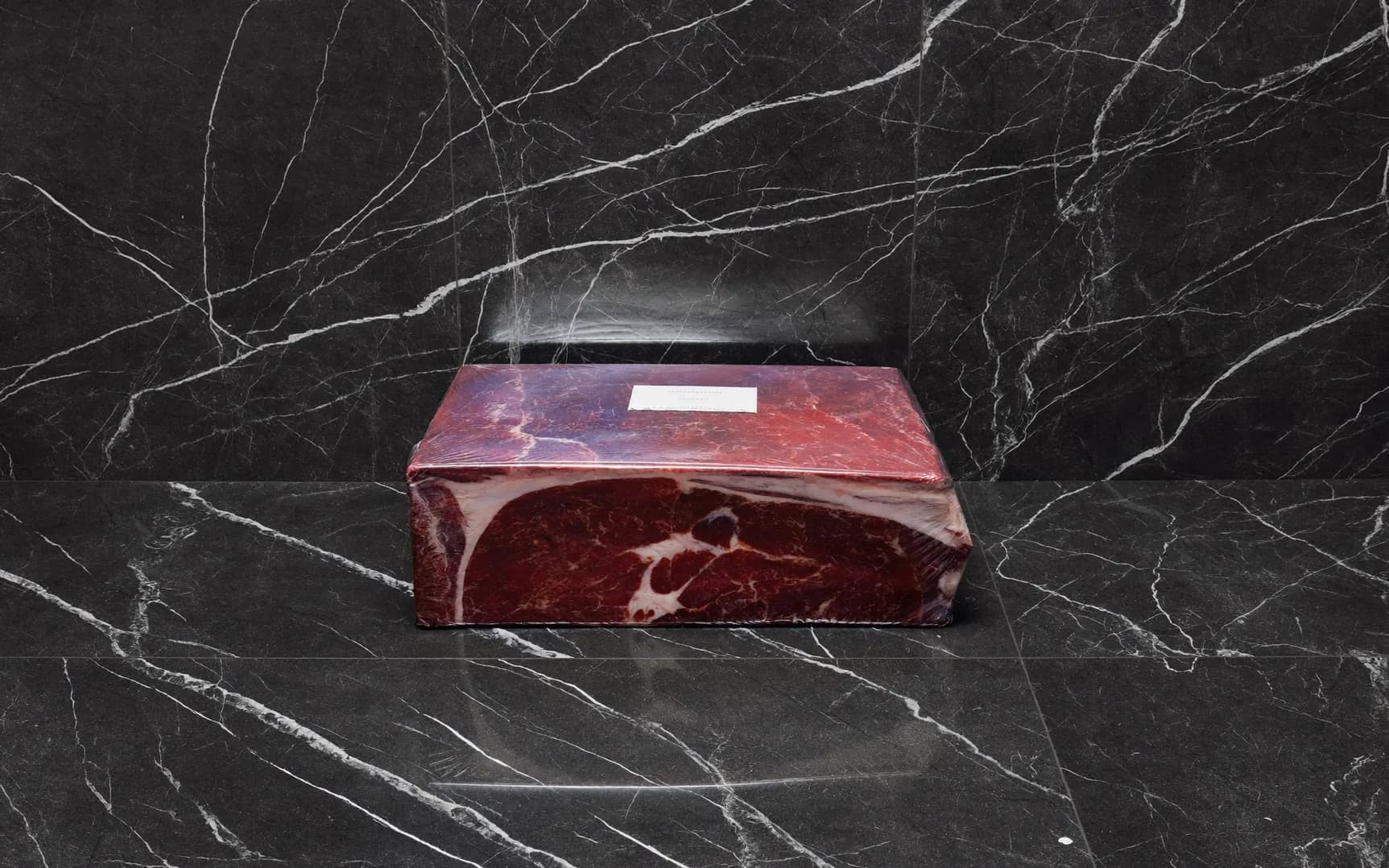
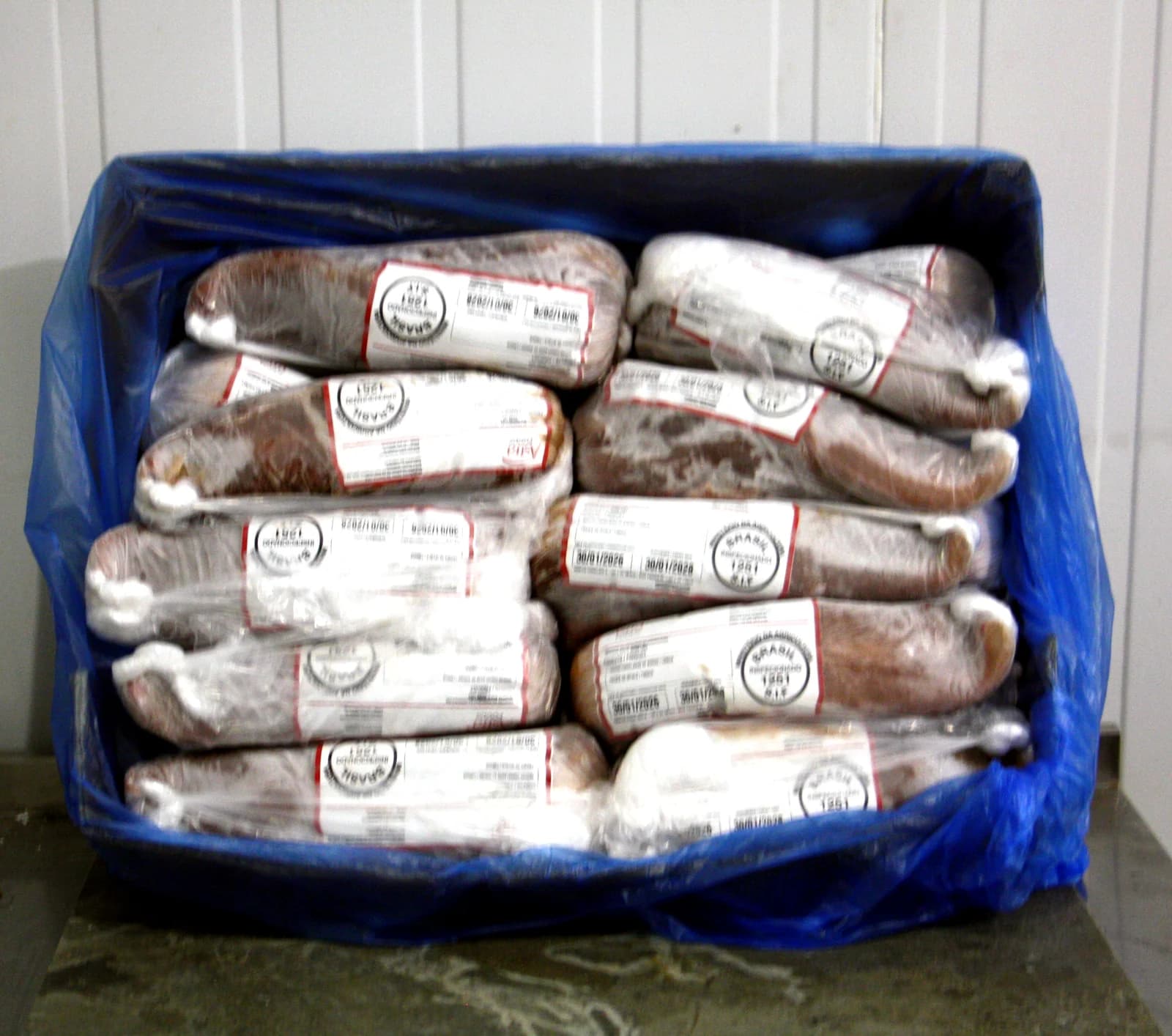
Trimmings themselves are what is left after the primal cuts have been boned and trimmed: pieces of meat and fat of varying size that will never make a steak but are exactly what mince needs. They usually reach the plant as frozen blocks in carton boxes and are stored at −18 °C. We supply Brazilian trimmings in carton boxes, minimum order 50 kg.
What the numbers mean: visual lean and chemical lean
The ratio in the name is a visual assessment (visual lean, VL): an operator on the line looks at the trim and assigns it to the 70/30, 80/20 or 90/10 category. Only a laboratory can give the exact fat content. That figure is called chemical lean (CL), and it is what exporters usually write in their specifications: 90CL, 85CL, 70CL. In practice the visual category and the lab result can differ by a few percentage points, and that is normal.
For a technologist this gives a simple rule: base the recipe on CL, not on the category name. If you have your own lab or a fat analyser, test the first batches from a new supplier so you know the real spread and can allow for it in the recipe, rather than discovering it in the finished product.
How the fat content affects the mince
Juiciness and flavour
Fat carries flavour and juiciness. A 90/10 patty comes out on the dry, dense side unless fat is added separately; 80/20 gives a juicy patty that holds its shape; 70/30 is the juiciest when raw, but on the grill some of that fat simply runs out and the burger leaves a puddle on the grate. That is why 70/30 is rarely used on its own — it is added to a lean base.
Shrinkage and yield
The more fat, the greater the shrinkage in cooking: fat renders, water evaporates, and the finished product weighs less. For a restaurant that is the gap between the burger weight stated on the menu and what the guest sees on the plate; for a plant it is the yield of finished product per tonne of raw material. As a rule, 80/20 is the compromise where shrinkage is still predictable and the juiciness is already there.
Cost
Lean trimmings usually cost more per kilogram and fat trimmings less, so a blend is often better value than buying ready-made 80/20. But the figure to watch is not the price per kilogram of raw material — it is the price per kilogram of finished product after shrinkage. Cheap 70/30 can make an expensive patty if a third of the weight has rendered out as fat in the pan.
Which to choose: applications table
| Product | Ratio | Why |
|---|---|---|
| Burgers and patties for HoReCa | 80/20 | Juicy, predictable shrinkage, the patty holds its shape |
| Retail mince | 80/20 or 85/15 | The all-purpose option for home cooking |
| Cooked sausages and frankfurters | 90/10 as the base | Lean beef gives the mince its bind; fat is added according to the recipe |
| Semi-smoked sausages | 90/10 + 70/30 | Needs both fat content and a visible pattern on the cut face |
| Pelmeni and meat-filled dumplings | 80/20 or 75/25 | The filling stays juicy after boiling and excess fat does not leak into the broth |
| Chebureki and belyashi (fried pasties) | 75/25 | The filling stays juicy during frying |
The table is a guide, not a standard: every plant has its own recipe, equipment and customers. What matters is knowing where the fat in the product comes from and how much of it is really there.
Beef trimmings 70/30 are supplied on request (back-order): in carton boxes, minimum order 50 kg, price on request.Beef trimmings 70/30 in the catalogue →
Blending: how to get 80/20 from 90/10 and 70/30
The simplest tool is the Pearson square, or the same formula on a calculator. The share of the lean component equals (fat of the fat component − target fat) / (fat of the fat component − fat of the lean component). From there it is four steps.
- Write down the fat contents: lean component 10%, fat component 30%, target 20%.
- Work out the lean share: (30 − 20) / (30 − 10) = 0.5, i.e. half.
- The rest is the fat component: 1 − 0.5 = 0.5.
- For 100 kg of 80/20 mince, take 50 kg of lean trim 90/10 and 50 kg of beef trimmings 70/30.
- 80/20 — 1 : 1 (50 kg lean trim 90/10 + 50 kg trimmings 70/30)
- 85/15 — 3 : 1 (75 kg + 25 kg)
- 75/25 — 1 : 3 (25 kg + 75 kg)
These proportions work if the components really do contain 10% and 30% fat. If you have CL from the lab, use the real figures — on large batches a 3–4% difference in fat shows up in both the cost and the product.
Lean trim 90/10 — lean beef trimmings for sausages and blends. On request (back-order), minimum order 50 kg.Lean trim 90/10 in the catalogue →
How to check a batch of trimmings on delivery
Trimmings usually arrive as frozen blocks in carton boxes, and checking them on arrival takes a few minutes of attention that will save you disputes later.
- Temperature. The standard for frozen meat is no warmer than −18 °C. Probe between the blocks or into the core, not the surface of the box, and record the reading in the acceptance report.
- Box. Intact, dry, with no deformation or drip marks. Softened corners and leaks are a sign the box has already been through a thaw.
- Block. Even, with no thick layer of frost inside the packaging and no ice frozen to the bottom — both are signs of thawing and refreezing.
- Labelling. The box normally shows the product name and lean/fat ratio, the producer and establishment number, production date and shelf life, batch number, net weight and storage conditions. Check these against the delivery documents.
- Spot check. Open one or two boxes from different points on the pallet: colour, smell, and whether the ratio looks as declared.
We provide documents with every batch. Beef trimmings 70/30 and lean trim 90/10 are on request (back-order), minimum order 50 kg; industrial beef from 100 kg. Pickup from our warehouse in Mykolaiv or delivery by Nova Poshta — from a single box.
If you are in meat processing, we will tell you which items are available now and in what volumes, and work out a blend for your recipe.For meat processing →