Kitchen
Steak Doneness Levels: Temperatures, Time per Side and Probe Checks
Six doneness levels from blue to well done: temperatures at pull and after resting, colour of the cut surface, time per side for a 3 cm steak and how to.
5 min read · updated · MYASYA team
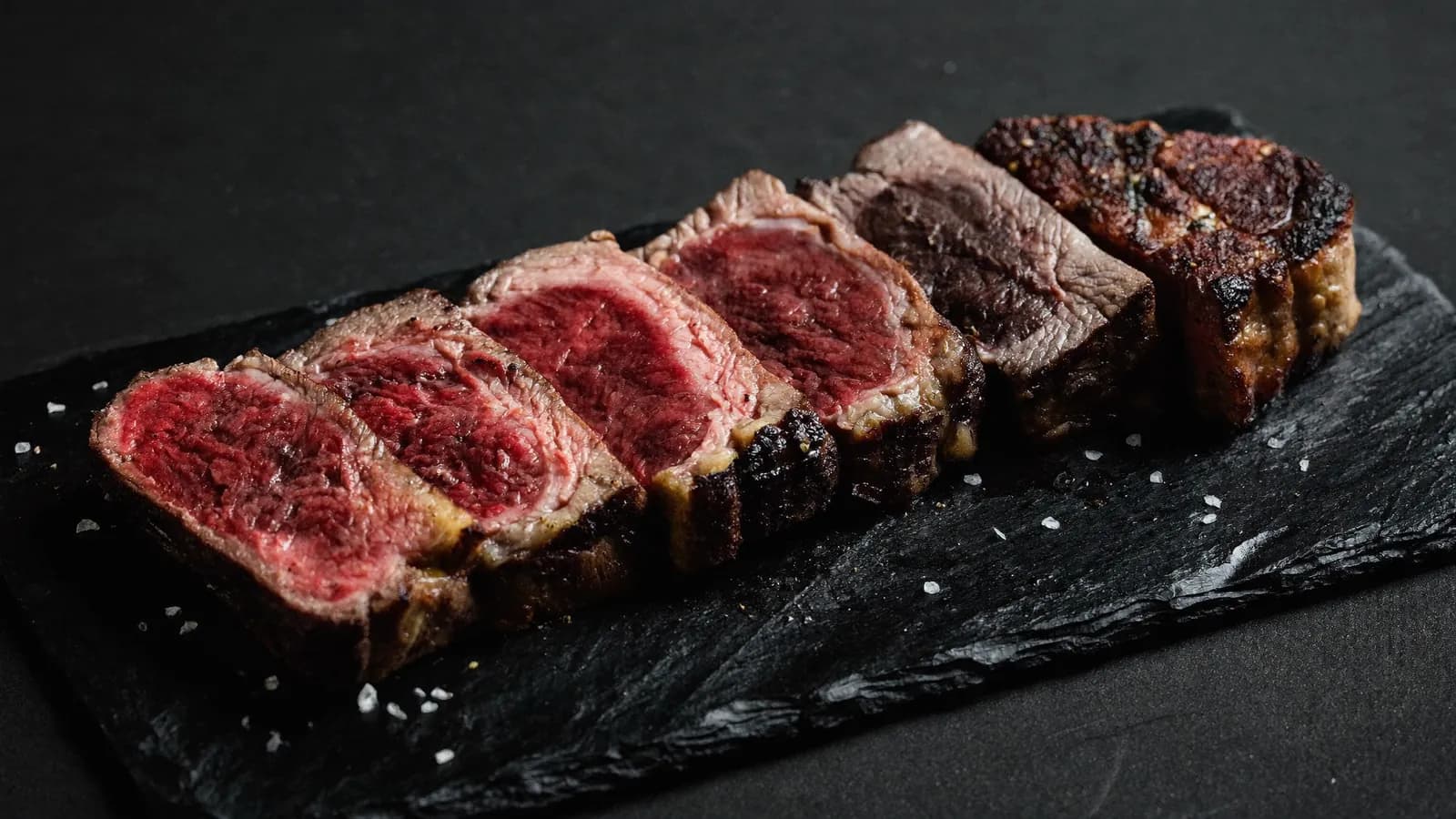
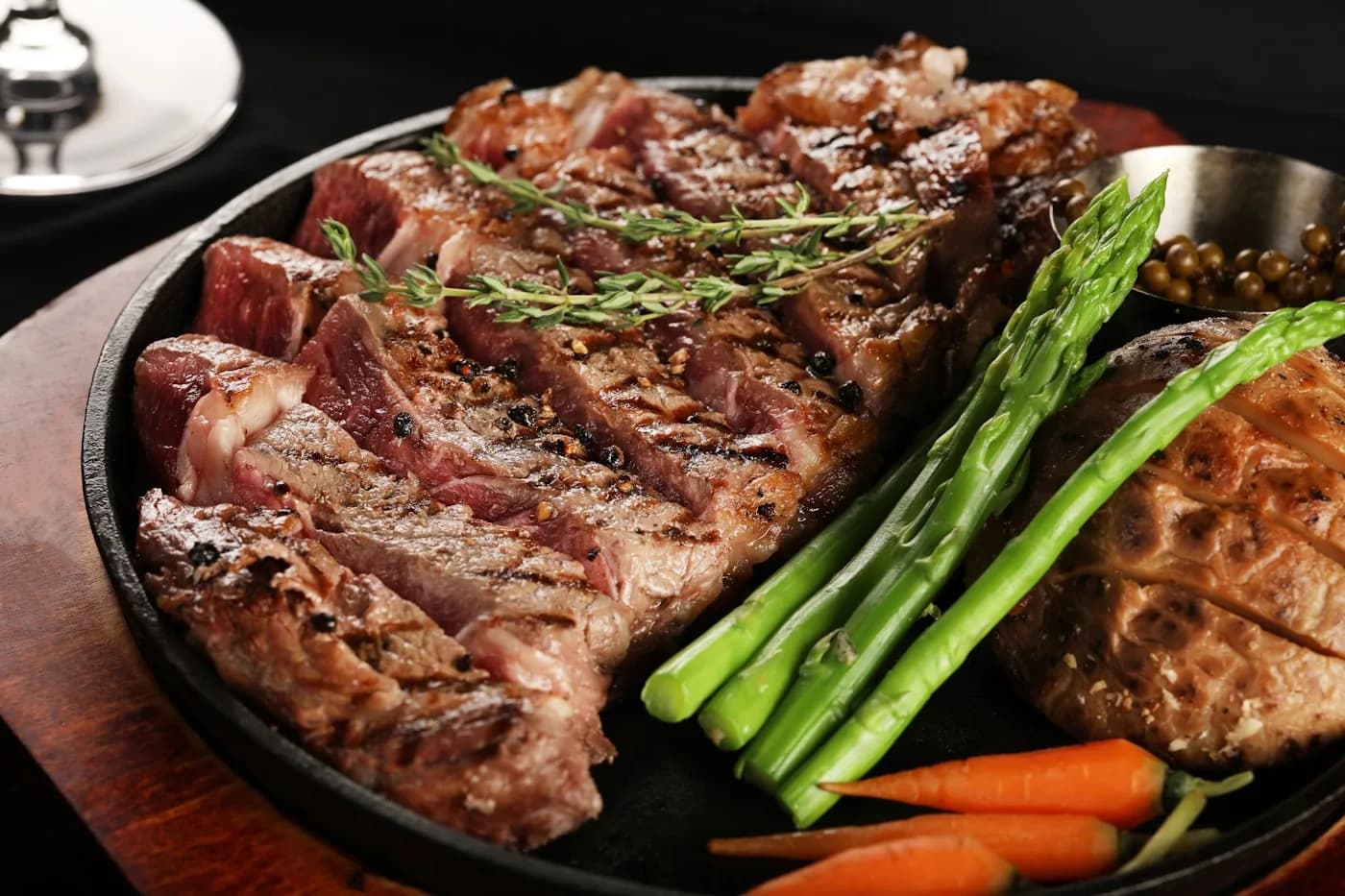
Steak doneness is set by the internal temperature at the centre of the piece, not by minutes in the pan. Medium rare is 52–55 °C when pulled from the heat and 55–58 °C after resting; medium is 57–60 and 60–63 °C. Time per side is only a guide: it depends on thickness, the starting temperature of the meat and how hot the surface is. The one tool that gives the same result on the first and the fiftieth steak of the night is a probe thermometer.
Doneness chart: temperature, colour, time
Once off the heat, the temperature at the centre usually climbs another 3–5 °C as the outer layers pass their heat inwards while the steak rests. So pull it a few degrees short of the temperature you want on the plate. The time per side in the chart is an estimate for a 3 cm steak, tempered to room temperature, on a properly hot pan or grill. A piece straight from the fridge takes longer; a thinner one, less.
| Doneness | Pull from heat | After resting | Cut surface | Per side, 3 cm (approx.) |
|---|---|---|---|---|
| Blue | 46–49 °C | 49–52 °C | deep purple-red, barely warm centre | 1–1.5 min |
| Rare | 49–52 °C | 52–55 °C | red, warm centre | 2–2.5 min |
| Medium rare | 52–55 °C | 55–58 °C | pinkish-red, hot centre | 3–3.5 min |
| Medium | 57–60 °C | 60–63 °C | pink, juices run clear-pink | 4–4.5 min |
| Medium well | 62–65 °C | 65–68 °C | a hint of pink at the very centre | 5–5.5 min |
| Well done | 68–70 °C | 71 °C and above | grey-brown throughout | 6–7 min or finish in the oven |
How to measure with a probe thermometer
For steaks you need a probe with a thin needle and a fast response: a few seconds to a stable reading. A thick roasting probe is no use in service; by the time it settles on a number, the steak has moved on to the next level.
- Insert the probe from the side, parallel to the surface, so the tip lands in the geometric centre of the piece rather than the bottom third. Insert from the top only for thick pieces over 4 cm.
- Keep away from bone and large pockets of fat: bone heats at a different rate, and fat warms through differently from muscle, so a reading there will mislead you.
- Take the first reading one to two minutes before the estimated time and the second just before pulling. Every puncture releases juice, so do not probe a steak more than two or three times unless you have to.
- Before the shift, check the probe in a glass of iced water: it should read 0 °C. If it is off by a degree or two, allow for the offset; if more, replace the instrument.
- Wipe the needle between steaks, both for hygiene and so you do not carry heat over from the previous piece.
Why the touch test is unreliable in service
The touch test compares the firmness of the steak with the pad of your palm. For one piece at home it works. In a kitchen sending out fifty steaks a night, it lets you down for three reasons.
- Different cuts at the same temperature spring back differently: a marbled ribeye at medium is softer than a lean tenderloin at medium rare. A hand trained on one cut gets the other wrong.
- Thickness and starting temperature change the feel: 2.5 cm versus 3.5 cm, tempered versus straight from the fridge, give a different firmness at the same level.
- Two cooks have two different hands. A thermometer shows a number both read the same way, and the guest gets medium rare whoever is on shift.
Touch still has its place as a quick check between readings. But the call to pull belongs to the number on the probe.
Ribeye, striploin, tenderloin: why the doneness differs
The right level depends on the amount of intramuscular fat. The more marbling, the higher the temperature needed for the fat to render and give up its flavour; the leaner the cut, the closer to rare you should stop.
Ribeye — medium
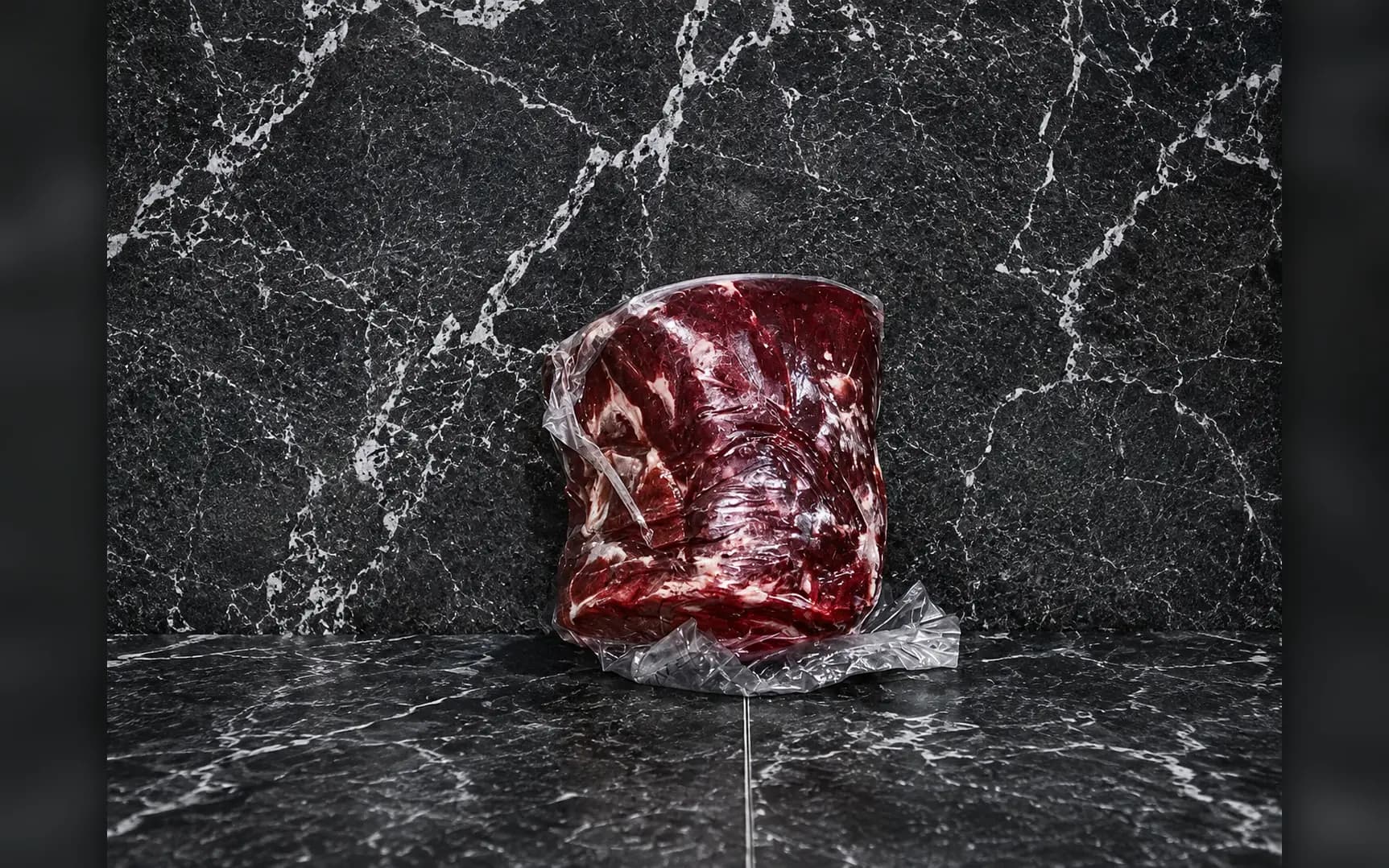
In ribeye the fat is distributed between the muscle fibres. At rare it stays waxy and does not deliver the juiciness this cut is valued for; at medium (60–63 °C after resting) the fat renders while the meat is still pink. Our Astra Foods ribeye is from Nelore cattle, fed 70% grass and 30% grain, in 1.2–1.5 kg primals; Frigon has more marbling thanks to Angus genetics and comes in primals of up to 3 kg.
Striploin — medium rare
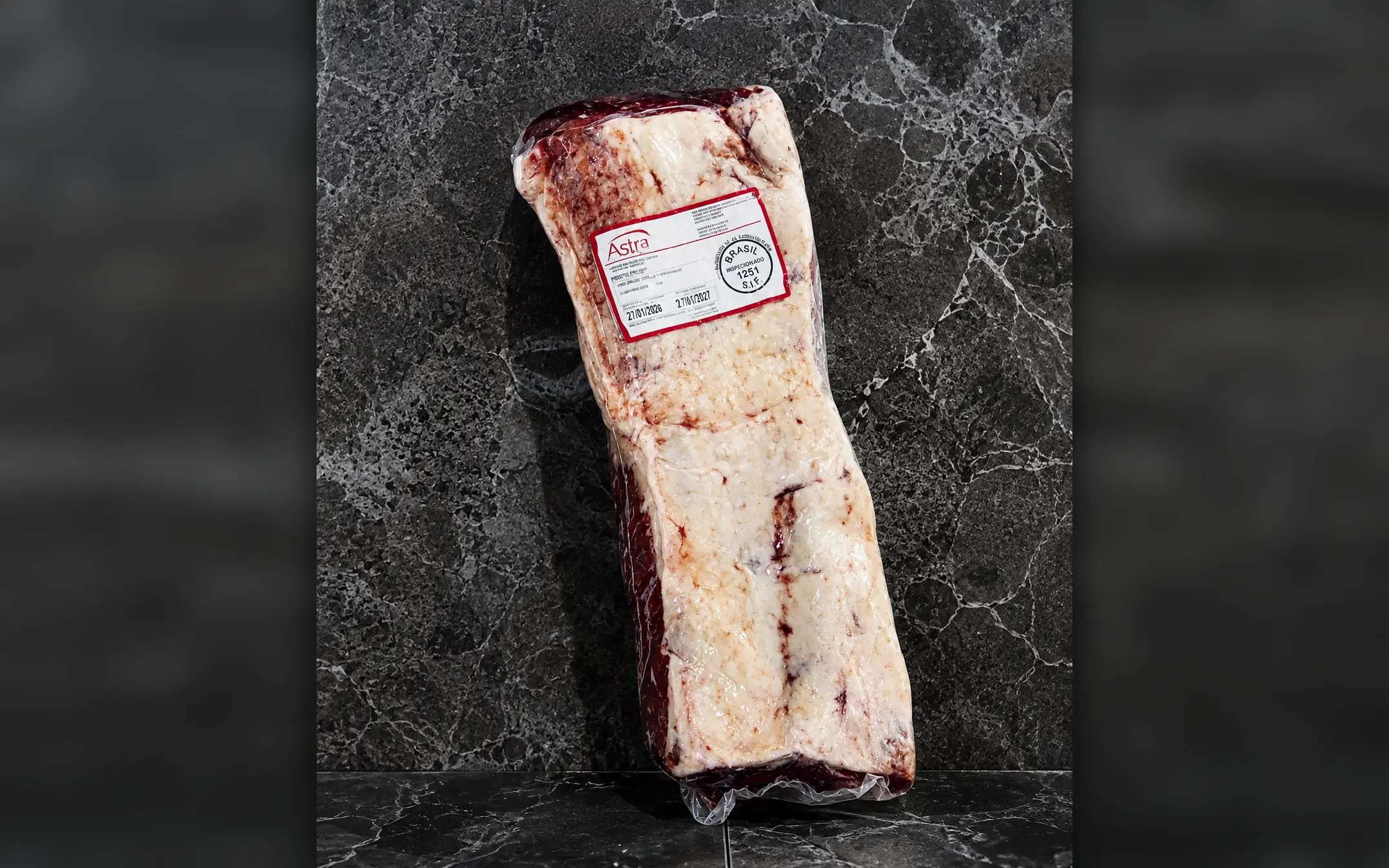
Striploin is leaner, with the fat cap running along the edge rather than through the meat. So keep the centre at medium rare (55–58 °C) and sear the cap separately by standing the steak on its edge for a minute. Astra primals are 4.5–5.5 kg, Frigon 3.5–4 kg; both cut into even 3 cm portion steaks.
Tenderloin — rare or medium rare
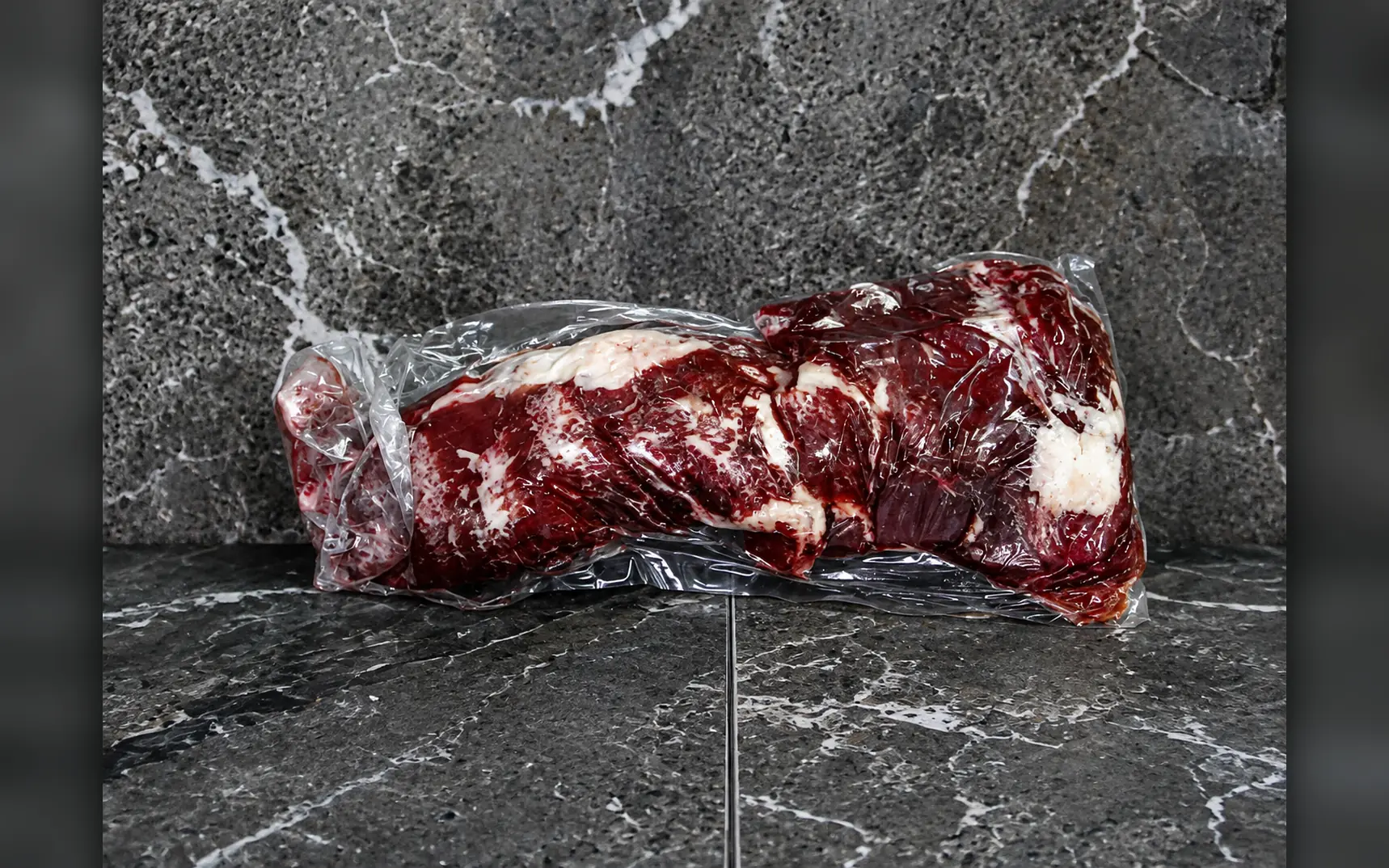
Tenderloin (filet mignon) has almost no marbling, so at medium and above it dries out quickly. Rare or medium rare, pulled at 49–55 °C, is the standard for this cut. Astra tenderloin comes as a 1.5–2.7 kg primal, chain on or off; cut portions to the same height and keep the thinner tail for medallions.
Astra Foods and Frigon ribeye: today's price, primal weight, minimum order 5 kg.Ribeye in the catalogue →
Striploin 4.5–5.5 kg Astra or 3.5–4 kg Frigon, vacuum-packed, −18 °C.Striploin in the catalogue →
Astra Foods tenderloin, chain on/off, 1.5–2.7 kg primal, minimum order 5 kg.Tenderloin in the catalogue →
What to tell the guest
Guests do not think in degrees. Describe the levels through colour and juice: rare is a red centre with plenty of juice; medium rare is pinkish-red and juicy; medium is pink with clear juices; well done has no pink. Then recommend the usual level for the cut: “we cook ribeye medium so the fat renders”, “we recommend tenderloin medium rare”. That settles most hesitation in ten seconds.
If a guest asks for well done, do not argue; just let them know the steak will take longer. Write the doneness on the ticket in the same words as the chart: not “medium-ish” or “a bit bloody” but medium rare. The same language front of house and in the kitchen does half the work of consistency.
How to stay consistent across 50 steaks a night
Consistency is built before the doors open, not during the rush. A few rules that hold the result whoever is on the grill tonight.
- Uniform thickness. Portion by height, not just by weight: 3 cm for every steak of a given cut, and the chart times hold as a guide.
- One tempering standard: either every steak comes out of the fridge 30–40 minutes before cooking, or none does.
- A probe at every station, checked in iced water at the start of the shift. One instrument for the whole kitchen means missed readings.
- Pull temperatures on a card by the stove. Not in the cook's head or in a chat, but in plain sight.
- A fixed rest: 4–5 minutes for 3 cm on a warm plate. A steak that waits ten minutes at the pass will climb to the next level.
- Do not overload the surface: six steaks in one pan drop its temperature and the chart times no longer mean anything.
- One voice at the pass. One person checks the doneness and sends the plate, so responsibility is not spread thin.
A frozen vacuum-packed primal works in your favour here: it thaws whole in the fridge, cuts into portions of the same height and gives a predictable result from the first plate to the last.
How long a 1.2–1.5 kg ribeye takes to thaw in the fridge at 0…+4 °C and how to plan defrosting for a banquet.Storage and thawing →