Kitchen
Storing and thawing frozen beef in a professional kitchen
What a stable −18 °C means, indicative shelf life for vacuum-packed beef, how to thaw a 1.2–5.5 kg cut at 0…+4 °C and how to plan thawing for a banquet.
5 min read · updated · MYASYA team
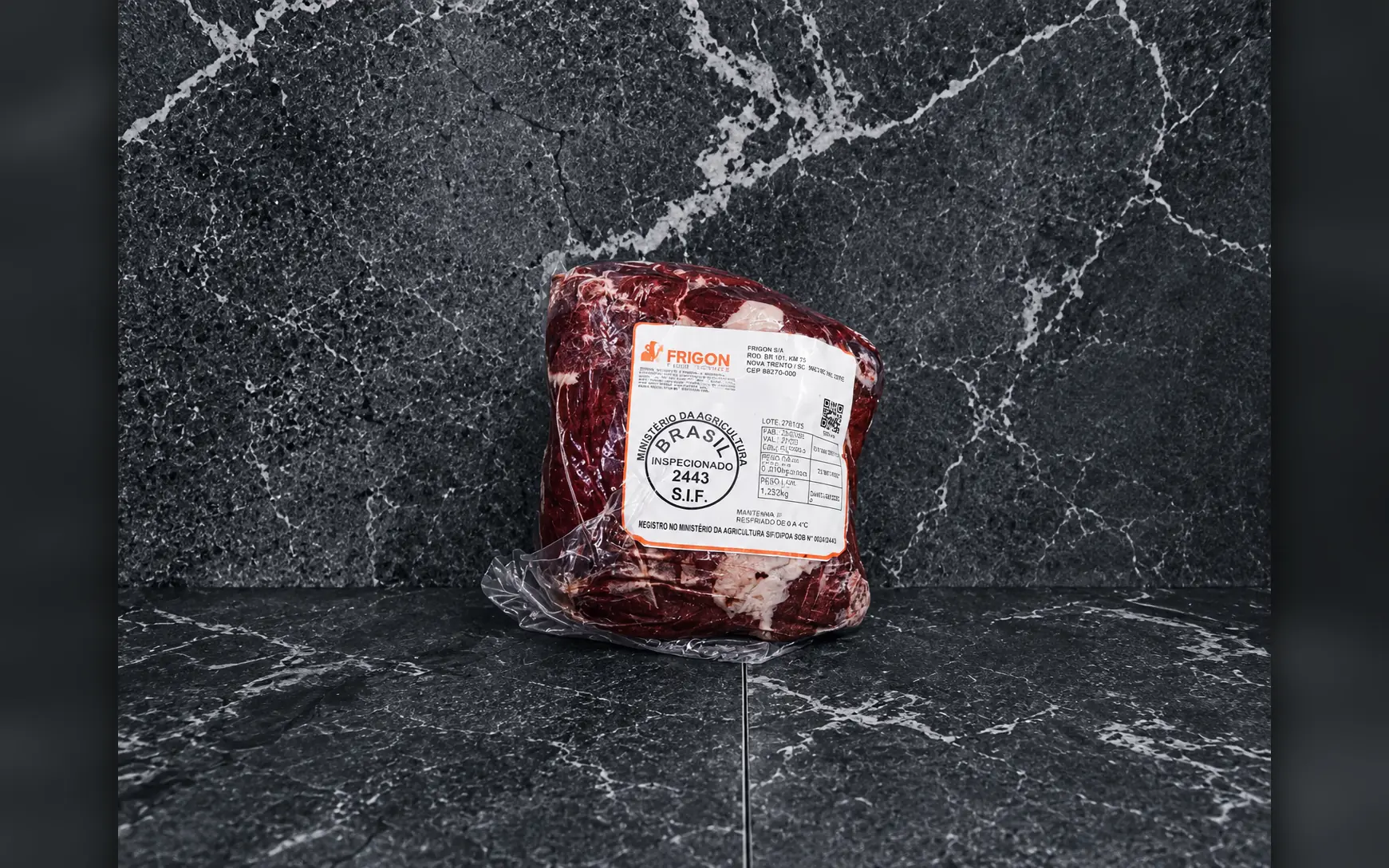
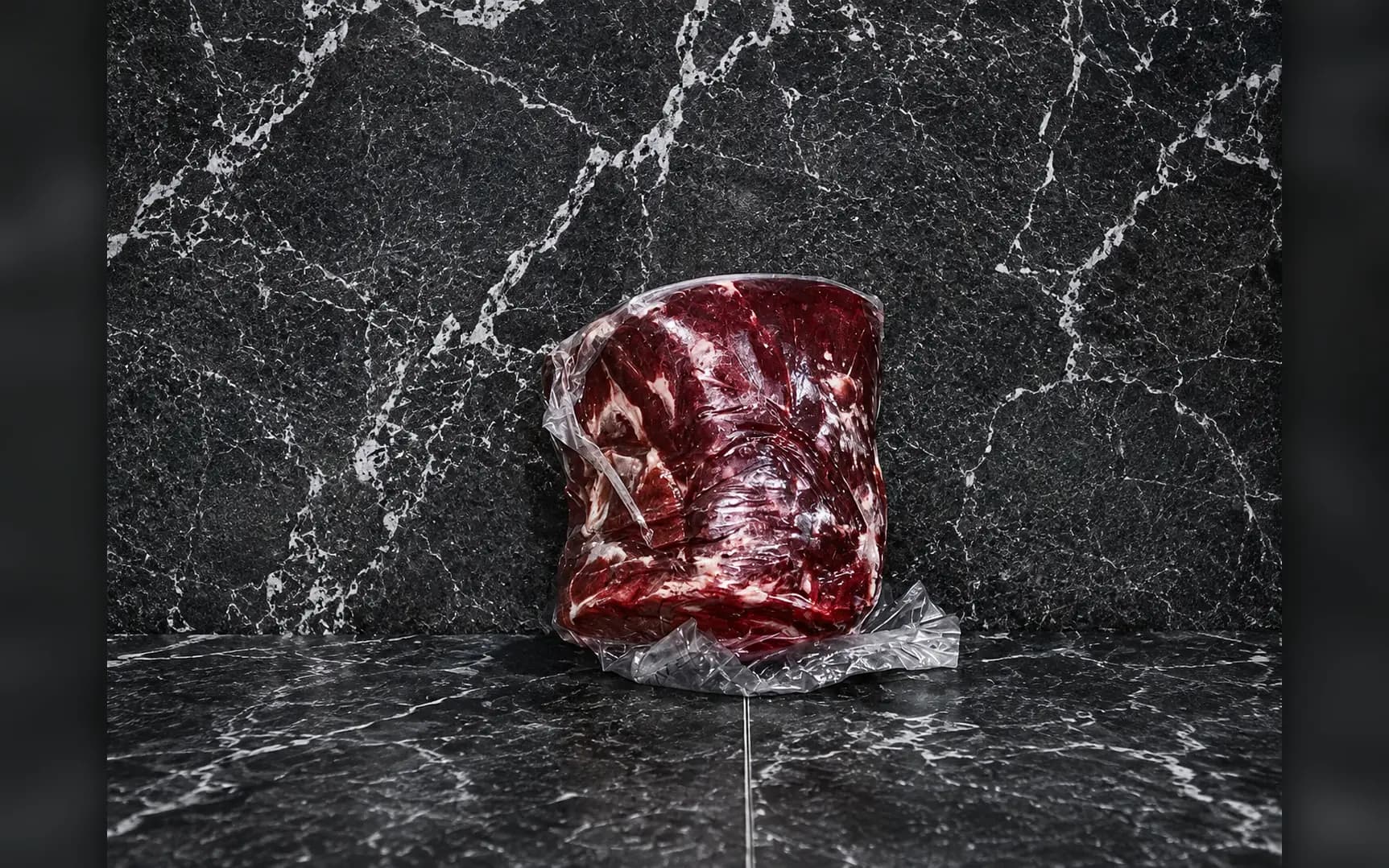
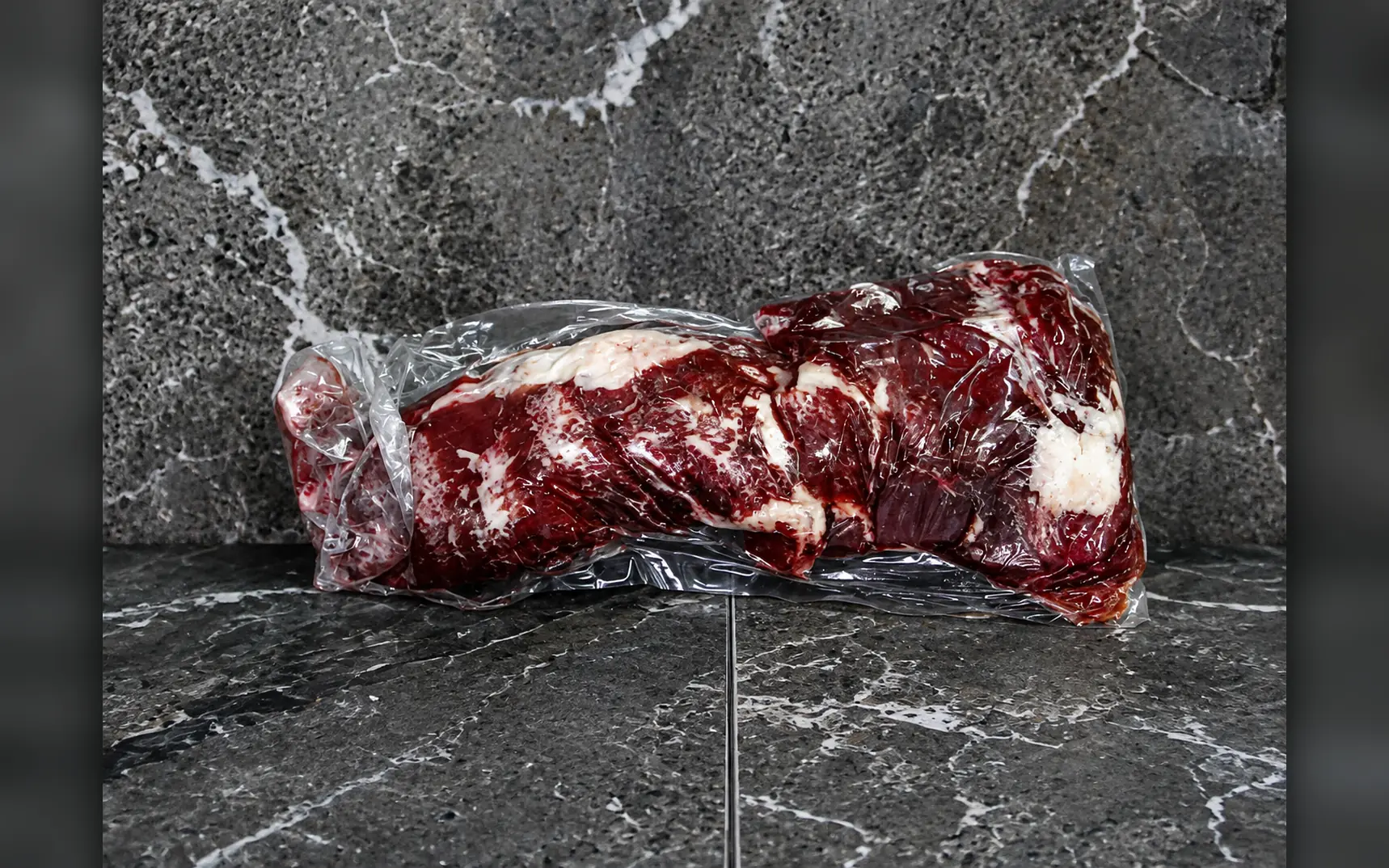
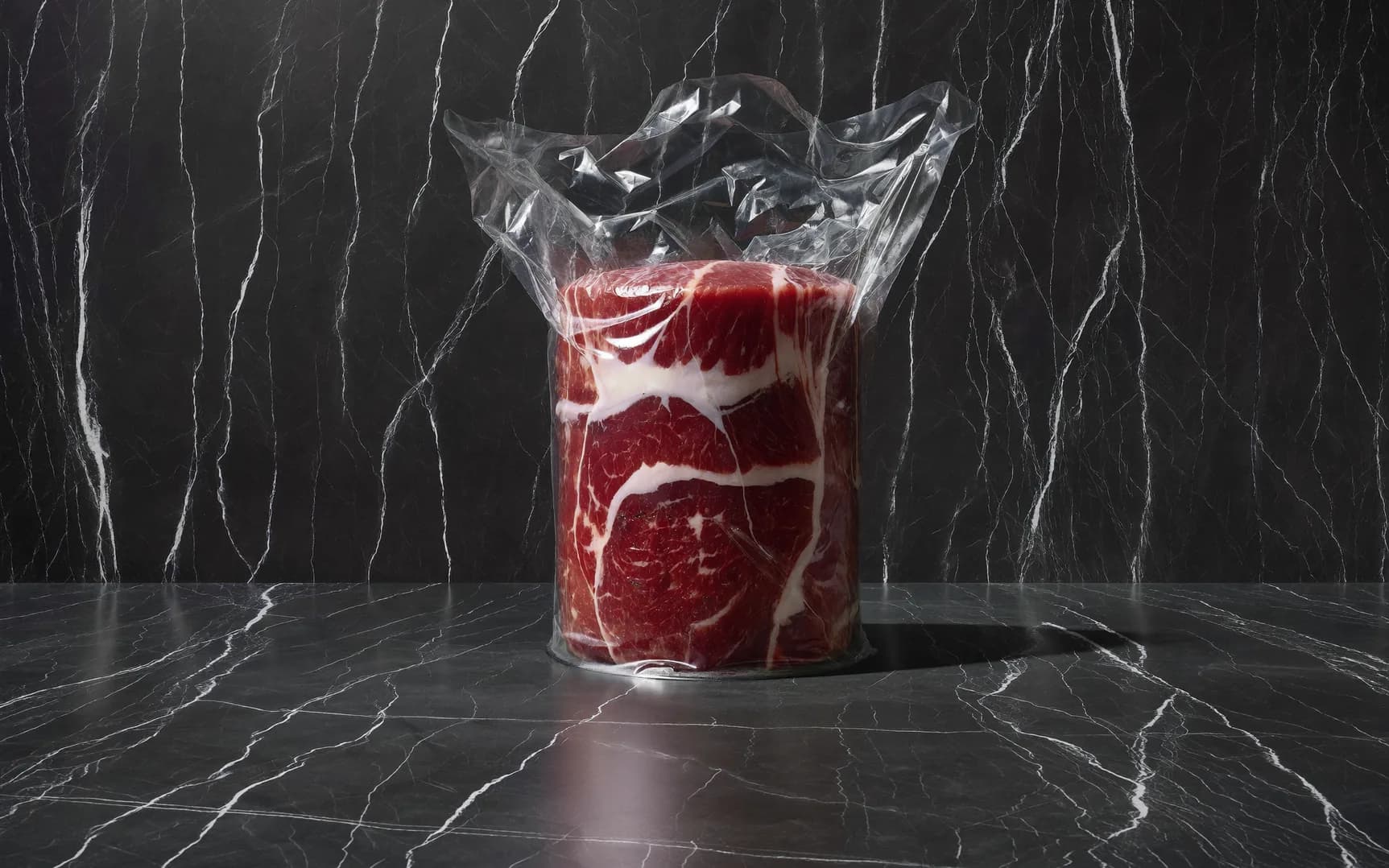
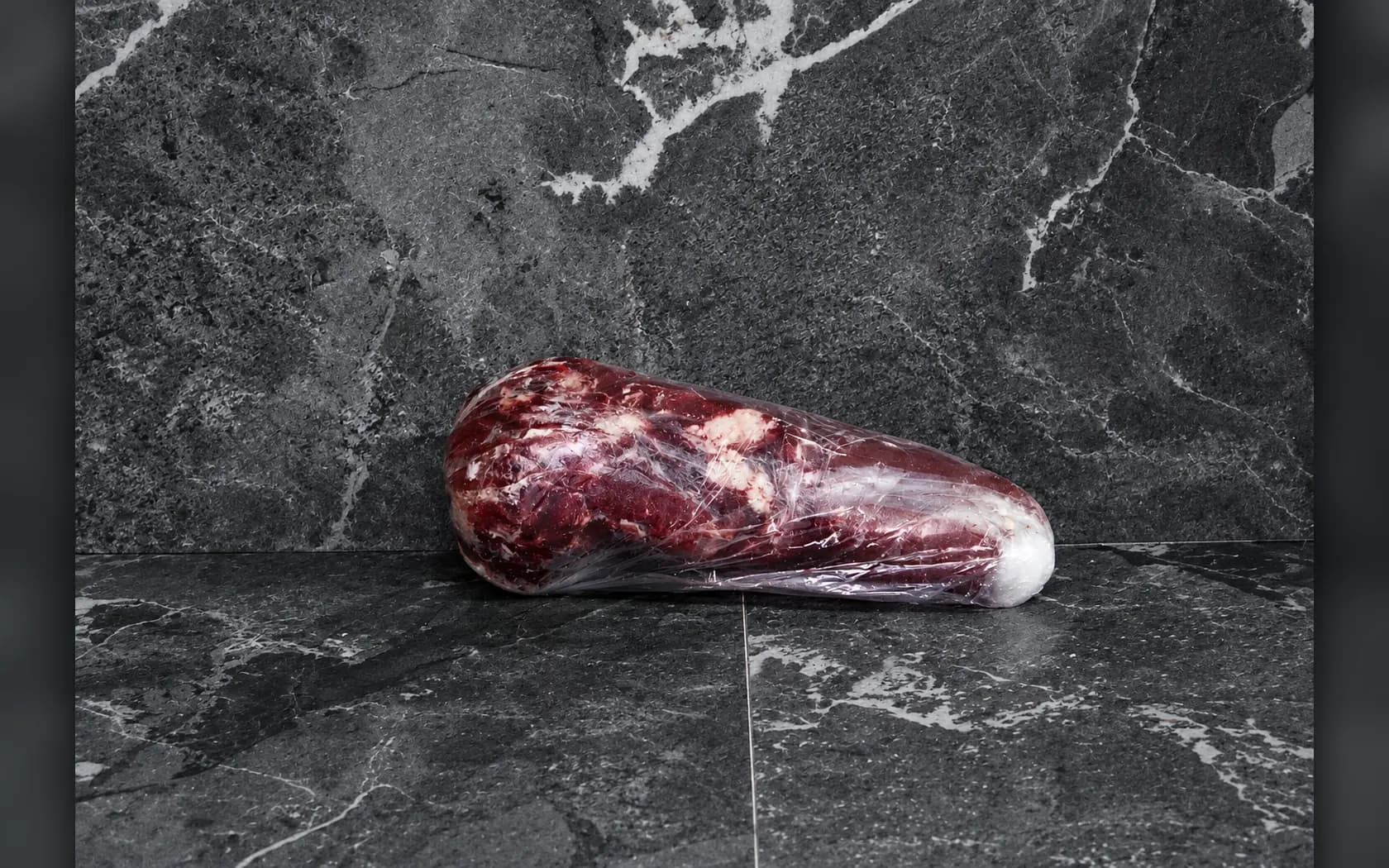
Frozen beef is kept at a stable −18 °C at the back of the freezer and thawed in the fridge at 0…+4 °C without opening the vacuum pack: a 1.2–1.5 kg ribeye takes roughly 24–36 hours, a 4.5–5.5 kg striploin 2.5–3.5 days. Water, room temperature and refreezing are not options. Below: the reasons why, indicative timings in table form and a worked thawing calculation for a banquet.
What −18 °C means and why stability matters
Minus 18 °C is not simply "very cold". At this temperature microorganisms stop multiplying, and enzymatic and oxidative processes in the meat slow to a crawl, which is why −18 °C became the accepted standard for frozen product: a cut keeps its fibre structure, colour and moisture for months.
For a kitchen, the figure itself matters less than how stable it is. Every rise to −10…−12 °C partly melts the fine ice crystals inside the muscle, and when the temperature drops back to −18 °C they refreeze into larger ones. Large crystals rupture cell walls: after thawing, such a cut gives up more juice into the bag and holds its shape less well on the grill.
Temperature fluctuates most near the freezer door: every opening lets in warm air, and product on the door shelf or in the front row may in practice be sitting at −8…−12 °C while the back of the freezer holds −18 °C. So put steak cuts and tongue at the back and on the lower shelves, and keep what is going into service today near the door.
Shelf life of vacuum-packed beef
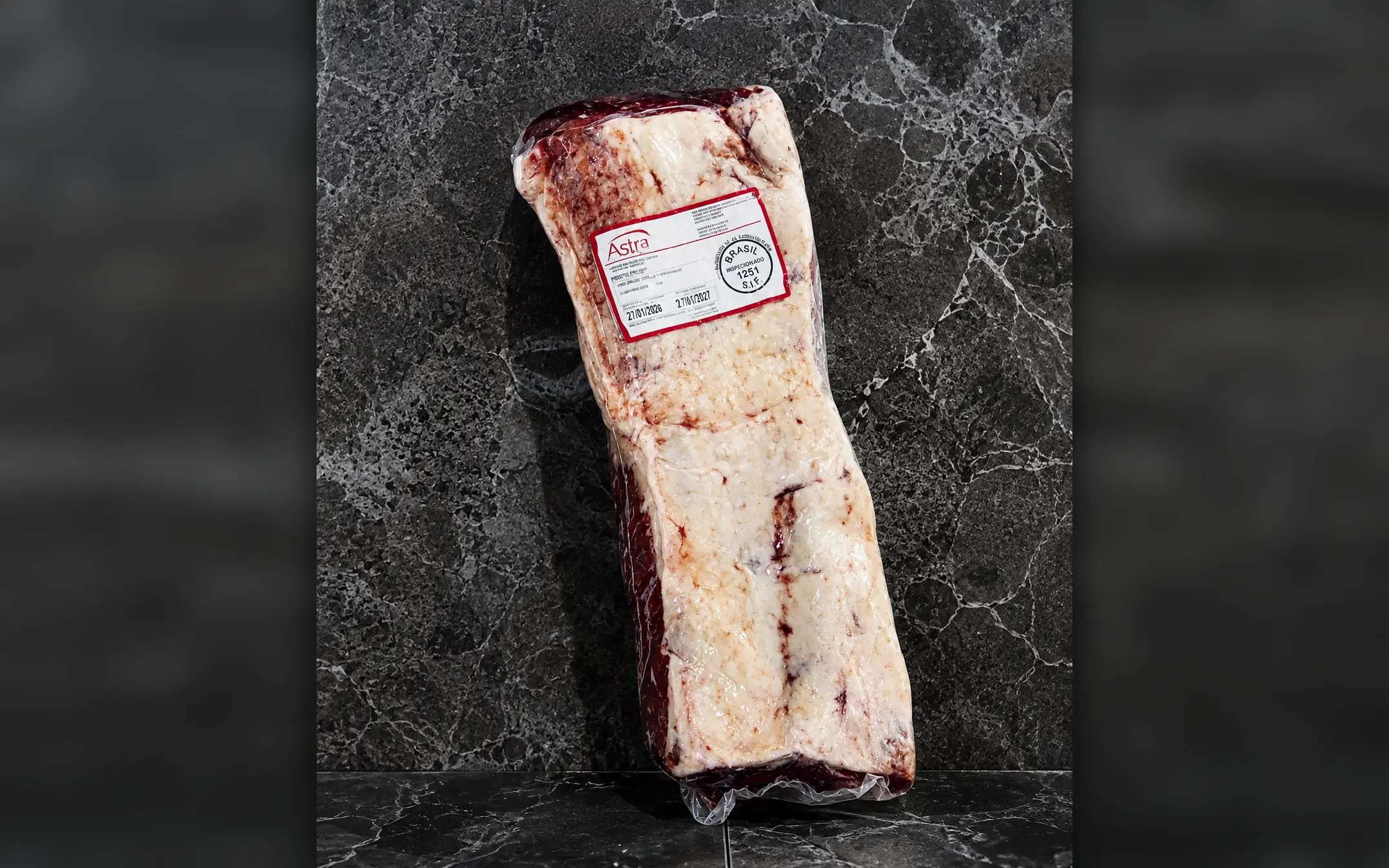
The primary reference is the date on the producer's label: it assumes an intact vacuum and a stable −18 °C. For frozen vacuum-packed beef cuts producers typically state 12 months or more; for offal the periods are usually shorter. The calendar is secondary, though: a batch that has been through several freezer defrosts loses quality faster than one that has spent a year at a steady −18 °C.
Once thawed, the count is in days. Below are general guidelines for a fridge at 0…+4 °C; your establishment's own procedures take precedence.
| Product state | Conditions | Indicative period |
|---|---|---|
| Frozen cut, vacuum intact | stable −18 °C | within the producer's shelf life, typically 12 months or more |
| Frozen vacuum-packed offal (tongue, cheeks) | stable −18 °C | as per the producer's label, usually shorter than for cuts |
| Thawed cut, vacuum intact | 0…+4 °C | typically 3–5 days once fully thawed |
| Vacuum opened, cut in a gastronorm container under film | 0…+4 °C | 1–2 days, then into service |
| Portioned steaks on a rack | 0…+4 °C | same or next day |
Ribeye, striploin and tenderloin (filet mignon), vacuum-packed, −18 °C, minimum order 5 kg.Steaks in the catalogue →
How to thaw a 1.2–5.5 kg vacuum-packed steak cut
When a chef asks how to thaw a steak, they usually mean a whole cut rather than a single portion. The only method that compromises neither safety nor texture is slow thawing in the fridge at 0…+4 °C in the unopened bag.
- Move the cut from the freezer into a gastronorm container or tray and place it on the bottom shelf of the fridge, so that condensation or a leaking bag cannot drip onto ready-to-eat product.
- Do not stack the bags: air must circulate around each cut, otherwise the bottom ones will thaw a day later than the top ones.
- Label it: name, weight, date and time it went in, and who put it in.
- Check readiness with a probe, not the clock: the cut should be soft through its full thickness, with 0…+2 °C at the centre. A firm centre with soft edges means it is not ready yet.
- Once fully thawed, give the cut another 6–12 hours in the fridge: the temperature evens out and the steaks cut from it will cook evenly.
Timing depends on weight and shape: a flat striploin thaws faster than a round cut of the same weight, and a fridge that is opened constantly is slower than a dedicated thawing cabinet. The figures below are a guide, not a standard.
| Cut | Bag weight | Time at 0…+4 °C |
|---|---|---|
| Beef tongue | 0.6–1.5 kg | 18–30 h |
| Ribeye Astra | 1.2–1.5 kg | 24–36 h |
| Tenderloin Astra | 1.5–2.7 kg | 30–48 h |
| Eye of Round Astra | 1.5–2.5 kg | 30–48 h |
| Ribeye Frigon | up to 3 kg | 36–60 h |
| Striploin Frigon | 3.5–4 kg | 48–72 h |
| Striploin Astra | 4.5–5.5 kg | 60–84 h (2.5–3.5 days) |
Why not in water or at room temperature
On the counter a cut thaws unevenly: the surface reaches +15…+20 °C and spends several hours in the range where bacteria multiply fastest, while the centre is still frozen. Warm water does the same thing faster, and washes out juice and softens the outer layer along the way; a steak from such a cut turns grey on the grill and will not hold a crust.
Cold running water over the intact bag is an acceptable emergency method for small pieces, but for a 4–5 kg cut it means hours of running water and still uneven thawing. Keep it for genuine emergencies, not as standard practice.
Refreezing
Thawed raw beef is not refrozen. A second crystallisation cycle damages the fibre structure even further, and between the cycles the product has passed through the temperature danger zone; either reason is enough on its own. If you have thawed more than you need, cook it, chill it quickly and handle it from then on as a cooked product.
What to do after opening the vacuum pack
A freshly opened bag may have a slightly sour smell, and the meat a dark, almost burgundy colour. For vacuum-packed beef this is normal: after 15–30 minutes in the air the smell disappears and the surface takes on its usual red shade. A sharp, persistent smell and a slimy surface are a different story: such product is not used.
- Pat the cut dry with paper towel; do not rinse it with water.
- Place it on a rack in a gastronorm container, cover it and label it with the opening date.
- Portion for a specific service, not a week ahead: portions keep less well than a whole cut.
- The remainder of the cut goes back into the fridge and is used within 1–2 days.
Thawing meat in a restaurant: planning for a banquet
A banquet for 60 guests with a 300 g steak is 18 kg of finished portions plus 10–15% for trimming, so roughly 20–21 kg of striploin. For Astra that is four bags of 4.5–5.5 kg, each taking 2.5–3.5 days to thaw. For a Saturday banquet, then, the cuts go in to thaw no later than Tuesday, with portioning on Friday.
- Work out the weight you need: number of portions × portion weight, plus an allowance for trimming.
- Choose the cut and the number of bags; the format of each cut is listed in the catalogue.
- Count back from the event date by the thawing time in the table and add 12–24 hours of margin for the temperature to even out.
- Order so that the batch arrives before the day it goes in to thaw, leaving time for receiving and a temperature check.
- Portion the day before the event and keep the portions in the fridge on racks.
Today's prices and the format of each cut are in the catalogue on the website and in the Telegram bot @agrovektoruabot, where orders are also placed.
Nova Poshta across Ukraine from a single carton box, or pickup from our warehouse in Mykolaiv, Mon–Fri 10:00–18:00.Delivery and pickup →
Terms for HoReCa: today's price list, documents with every batch, deferred payment by agreement for regular customers.For restaurants →