Kitchen
Beef Cheeks: How to Braise Them into a 'Collagen Bomb'
How to braise beef cheeks: trimming, searing, 3–4 hours at 140–160 °C or sous vide, doneness cues, serving ideas, yield and cost per portion.
5 min read · updated · MYASYA team
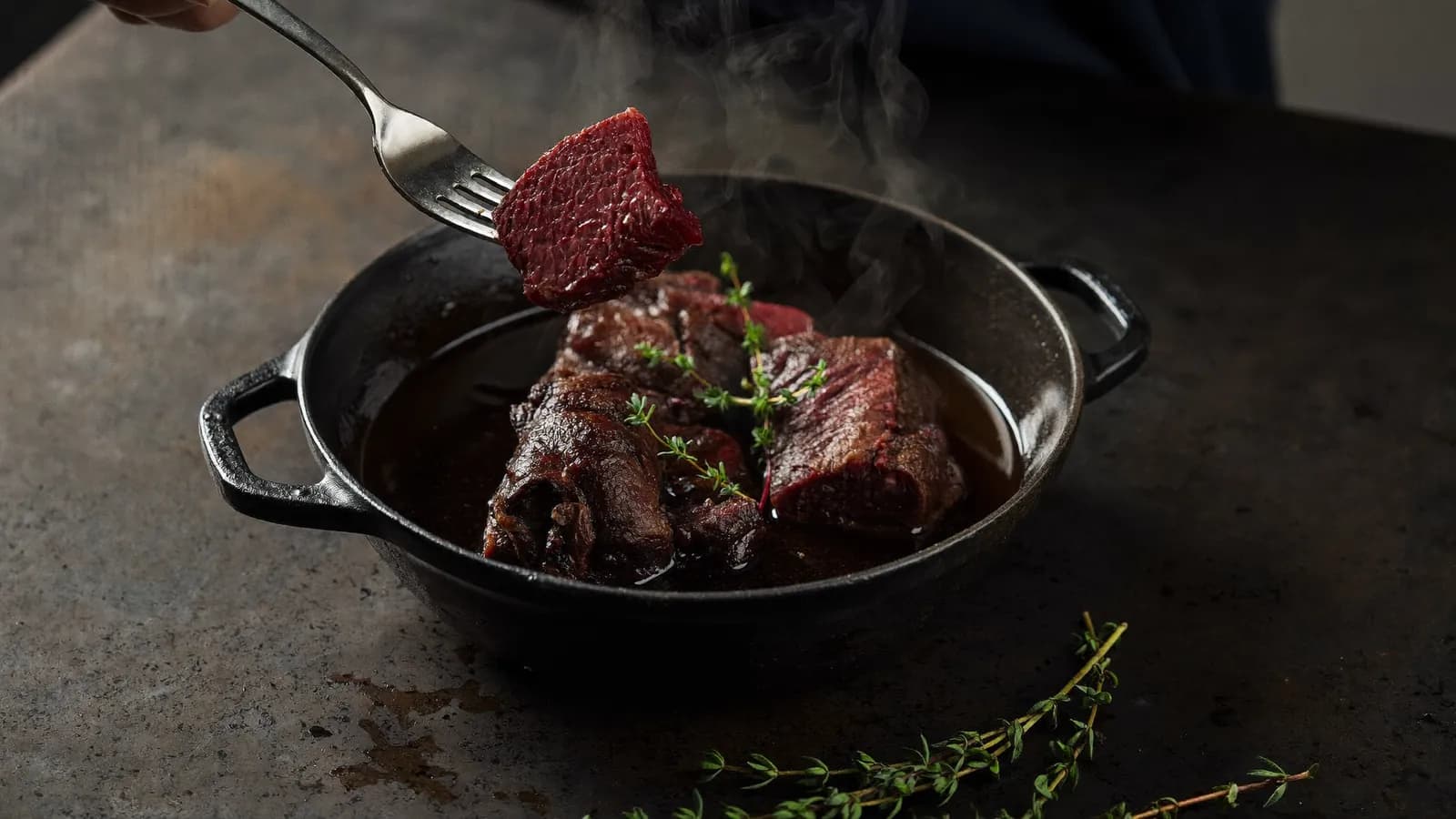
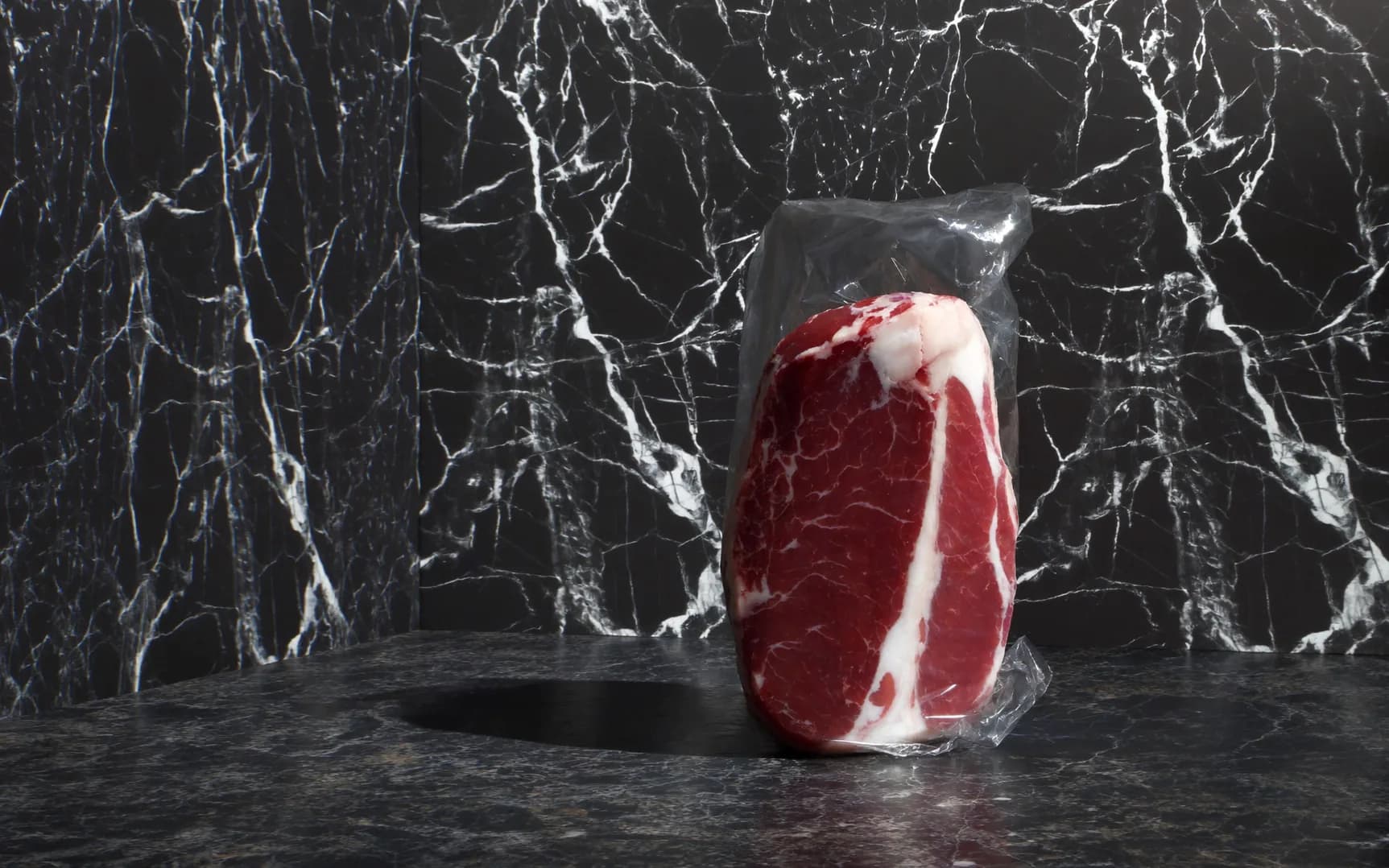
Beef cheeks are cooked low and slow: sear to a dark crust, add red wine or stock and braise for 3–4 hours at 140–160 °C, until the meat starts to pull apart under a fork. The cheek is a chewing muscle packed with collagen, so it does not forgive a quick fry; under long, moist heat that collagen turns to gelatin and gives you the 'collagen bomb' — a thick, glossy sauce and meat that melts in the mouth. At MYASYA, the cheeks are Frigon, Brazil: 300 ₴/kg today, minimum order 20 kg, currently on request (back-order).
What a cheek is and why it behaves the way it does
The beef cheek is a chewing muscle that works throughout the animal's life. Hence the dense fibres, plenty of connective tissue and little intramuscular fat. Five minutes in a pan leaves that structure tough; three to four hours in a moist environment hydrolyses the collagen into gelatin, which is what thickens the sauce without flour and keeps the meat juicy even after reheating.
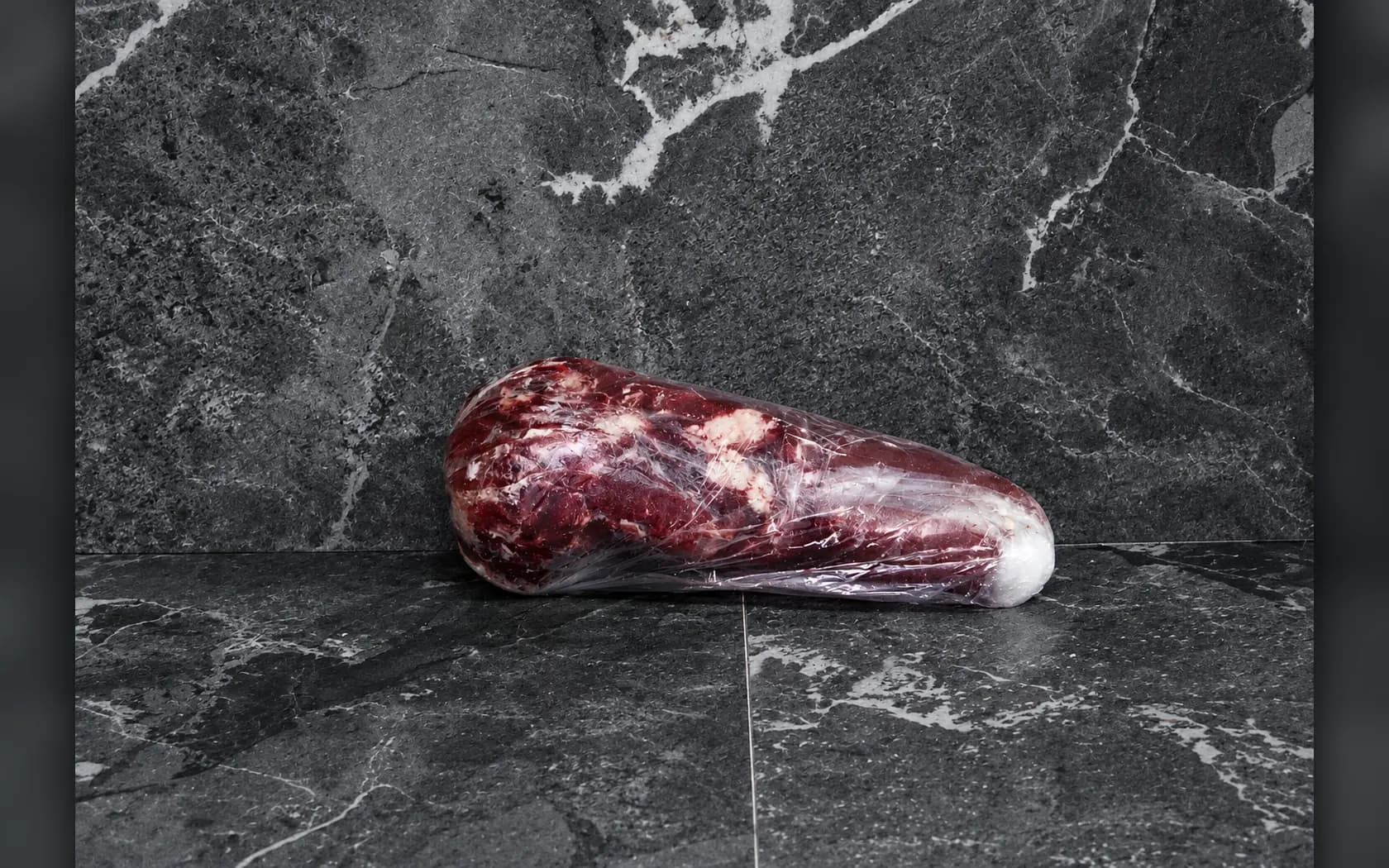
Our cheeks are produced by Frigon, Brazil, frozen and stored at −18 °C. The item is supplied on request, so for a banquet or a new menu item, plan the batch well in advance rather than the day before the event.
Frigon beef cheeks in the catalogue: 300 ₴/kg, minimum order 20 kg, on request.View beef cheeks →
Thawing and trimming
Thaw cheeks slowly in the cold room, not in water or at room temperature — the meat loses less juice and the surface does not dry out. Temperatures and timings for the whole catalogue are set out in a separate article on storage and thawing.
Trimming is the step that often gets skipped, and it should not be. The outside of the cheek carries a tough silverskin and residual fat. Silverskin does not soften during braising; it shrinks around the piece and leaves it sinewy. Cut it away with a thin, flexible knife, running the blade under the membrane rather than into the meat. A thin layer of fat between the muscles can stay — it will render into the sauce. Trimming takes roughly 10–15 % of the weight, which is a normal loss for this item.
How to thaw beef without losing juice or weight — a separate article.Storage and thawing →
How to braise beef cheeks: step by step
A classic braise is searing, an aromatic base, liquid and a long, gentle simmer under a lid. Below is a working method that scales easily from two kilograms to a full gastronorm pan.
- Pat the cheeks dry with kitchen paper, season with salt and sear over high heat to a dark crust on all sides. Do not overcrowd the pan, or the meat will stew in its own juices instead of browning and the sauce will come out pale.
- In the same pan, brown the carrot, onion and celery, and, if you like, a spoonful of tomato paste, cooking it until it darkens.
- Deglaze with red wine, scrape up everything stuck to the bottom and let it reduce by roughly two-thirds.
- Return the cheeks and add stock until the liquid comes two-thirds of the way up the meat. Add bay leaf, thyme and a few cloves of garlic.
- Cover with a lid or a parchment cartouche and put it into the oven at 140–160 °C. Allow 3–4 hours; from the third hour on, check every half hour.
- Lift out the meat, strain the sauce and reduce it separately until it coats the back of a spoon. Return the cheeks to the sauce.
Sous vide as an alternative
If the kitchen has an immersion circulator, cheeks can be cooked vacuum-packed: roughly 72 °C for 24–36 hours — common practice rather than the only correct regime. Sear the meat before or after, bag it with a little reduced sauce and seal. The result is more predictable, weight loss is lower, and the bags can be prepared in advance and regenerated as needed.
Signs of doneness
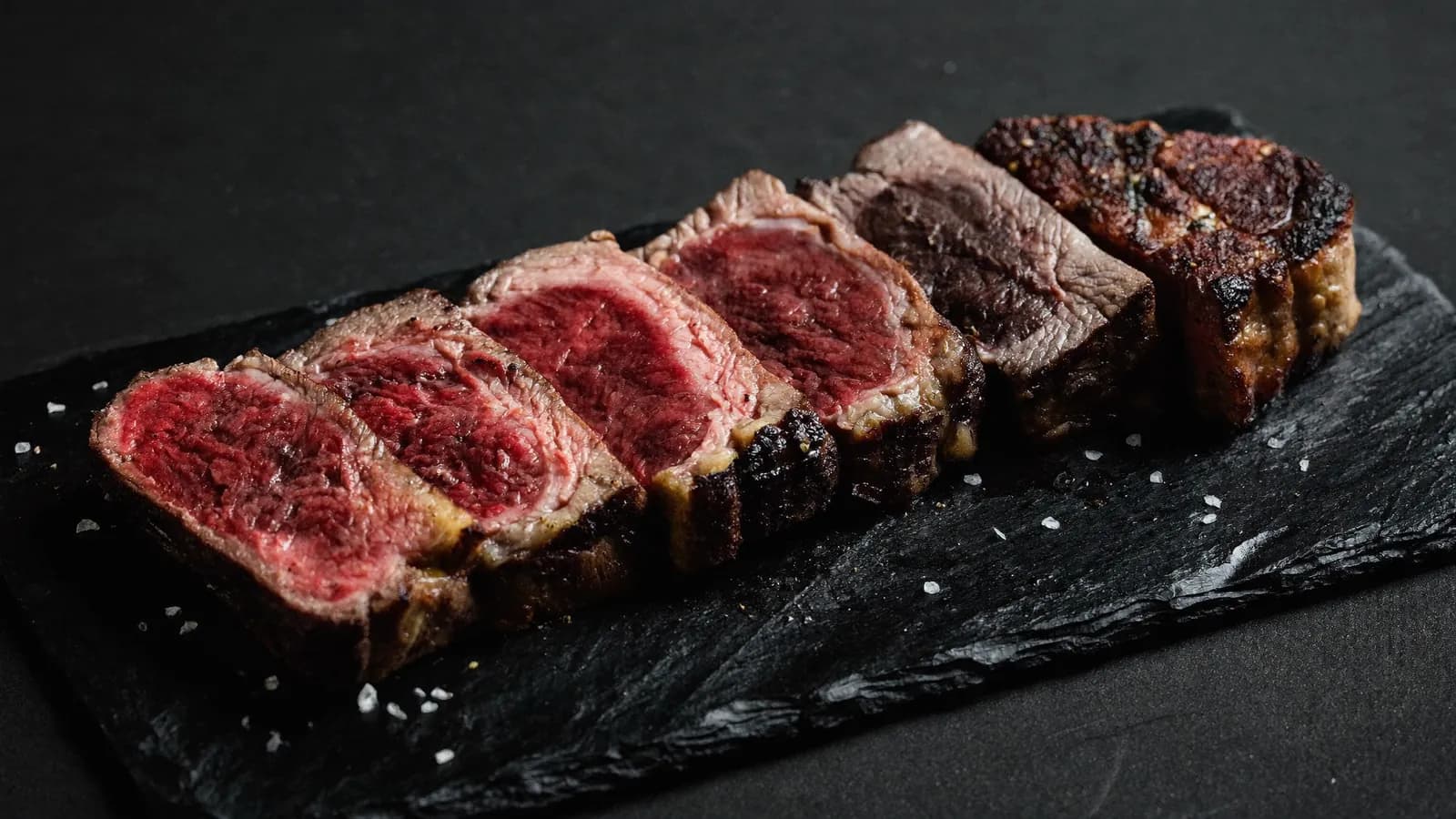
- A fork goes in without resistance and the meat pulls apart along the grain, but the piece still holds its shape.
- Pressed with a finger, the cheek gives softly rather than springing back like rubber.
- The sauce has turned glossy and slightly sticky on the lips — that is the gelatin released from the collagen.
- A thermometer tells you less here than texture: the centre is usually already above 90 °C, and what you are waiting for is tenderness, not degrees.
An under-braised cheek is tough and rubbery — just give it another 30–40 minutes. An over-braised one falls apart into dry fibres that will not hold the sauce, so once you pass the three-hour mark, do not leave the oven unattended.
Service and regeneration
Cheeks are one of the few dishes that are better the next day than on the day they are cooked. After braising, chill the meat quickly together with the sauce, as food-service regulations require, and keep it refrigerated in that same sauce — it protects the surface from drying out and stops the meat picking up stray odours.
On the pass, hold portions in sauce in a covered bain-marie, not dry on the side. Regenerate portion by portion: in a sauté pan on the hob or in a combi oven on steam, without bringing it to the boil — fierce heat tears fibres that are already soft. Sous vide bags are usually reheated in water at around 60–65 °C and then quickly glazed in hot sauce.
Serving: from mash to tacos
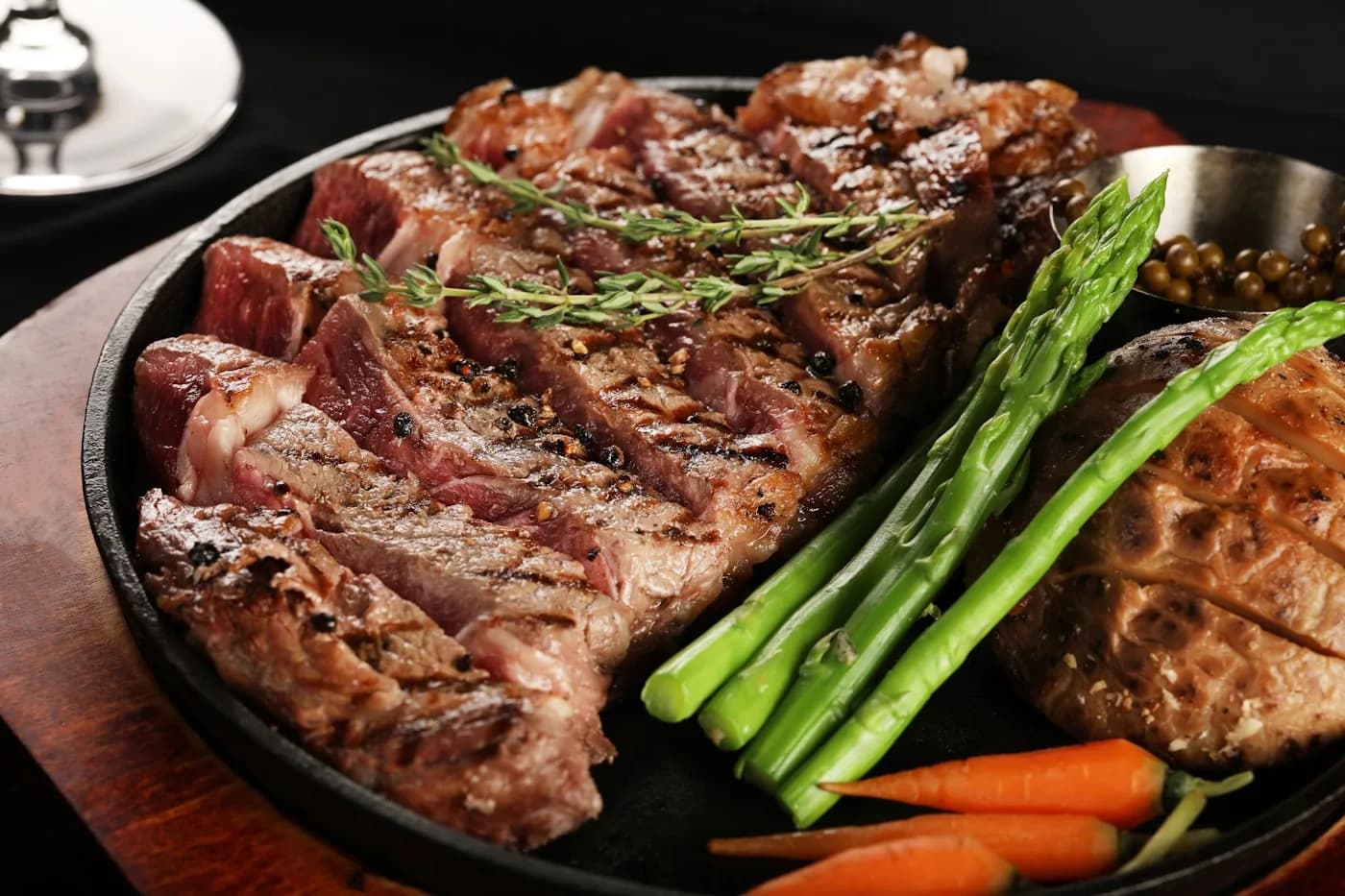
Cheek forgives almost any side; what matters is having something to mop up the sauce.
- Buttery mashed potato — the steakhouse and bistro classic.
- Polenta or a creamy cornmeal porridge — a banquet format that holds its heat well on the pass.
- Ragù with pappardelle: the pulled meat goes back into the reduced sauce.
- Tacos, bao or a sandwich with pulled cheek — a quick bar-menu item from the same prep.
- Roasted root vegetables and glazed carrots — when the side needs to be lighter.
Yield, cost and why it pays off for banquets
The calculation below is an estimate. Refine the figures in your own kitchen for your specific recipe card: losses depend on trimming, temperature and how far you reduce the sauce. The raw-material price is today's; once you order, the price per kilogram is locked in, and we confirm the total after we weigh the batch.
| Metric | Estimate |
|---|---|
| Raw-material price | 300 ₴/kg |
| Trimming loss | 10–15 % |
| Braising loss | 30–35 % |
| Cooked meat yield per 1 kg raw | 550–600 g |
| Portion of cooked meat | 150 g |
| Portions per 1 kg raw | 3.5–4 |
| Meat cost per portion | around 80 ₴ |
For a banquet it works like this: the minimum order of 20 kg gives roughly 70–80 portions of cooked meat. The dish can be fully prepared a day or two before the event, held in its sauce and regenerated with no loss of quality — no steaks cooked to order ten minutes before service. A meat cost within 80 ₴ per portion leaves room for pricing, and the result is consistent whether for 20 guests or 200.
Tongue, cheeks, liver — all offal in the catalogue: today's prices and minimum orders.Offal in the catalogue →