Kitchen
How to Cook Ribeye in a Restaurant Kitchen: Grill, Cast Iron and Reverse Sear
Thawing in the vacuum bag, portioning into 2.5–3.5 cm steaks, salting 10–40 min ahead, grill, cast iron with thyme, reverse sear and a temperature table by.
7 min read · updated · MYASYA team
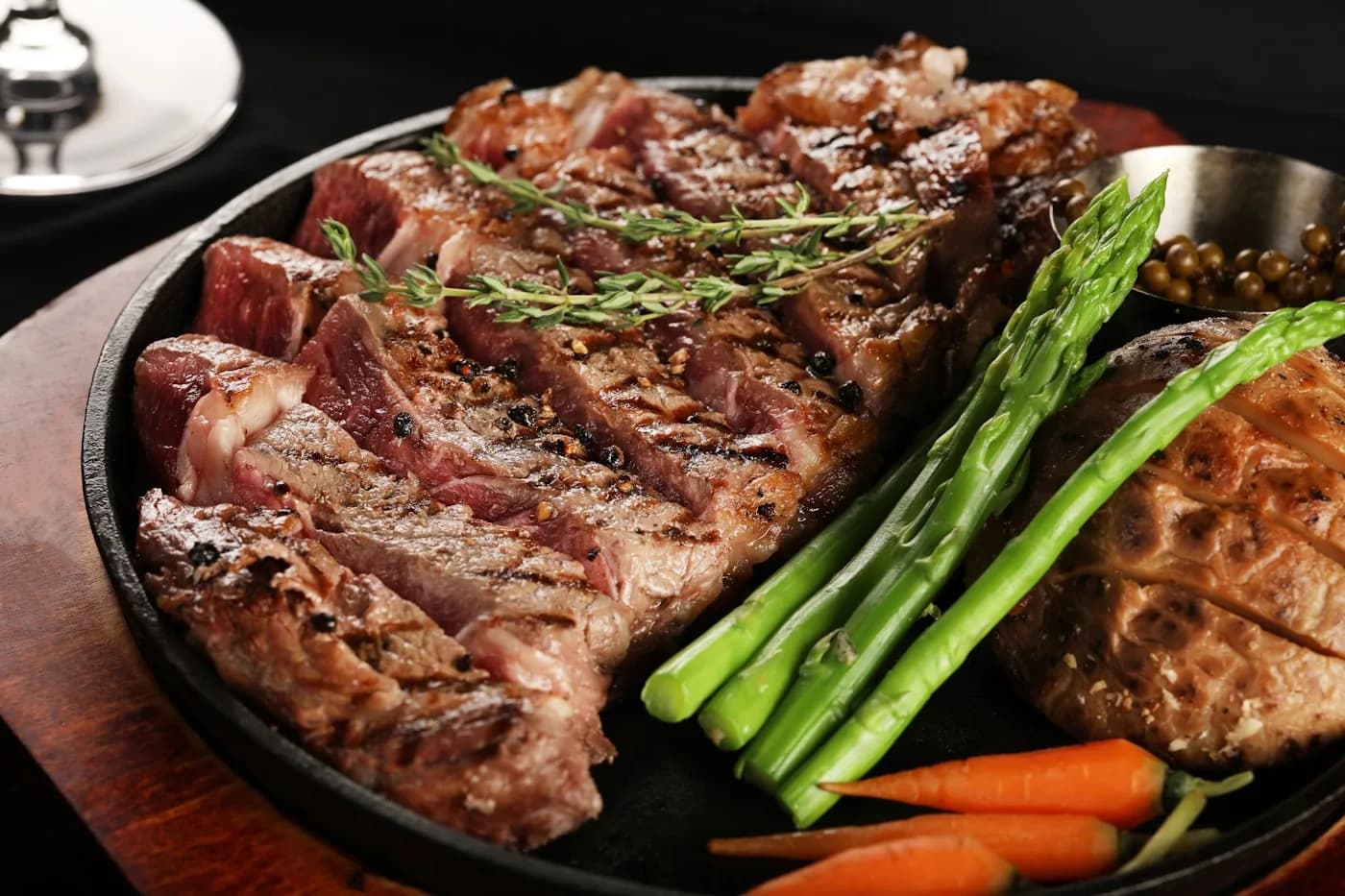
There are three ways to cook ribeye, and the choice comes down to the thickness of the steak: up to 3 cm goes on the grill or in a cast-iron pan, roughly 6–8 minutes in total; from 3.5 cm it is reverse sear, where the steak is first brought to 43–45 °C inside in the oven and then seared quickly. The rest is preparation: proper thawing, tempering, a dry surface and coarse salt 10–40 minutes before cooking.
Thawing in the vacuum bag and tempering
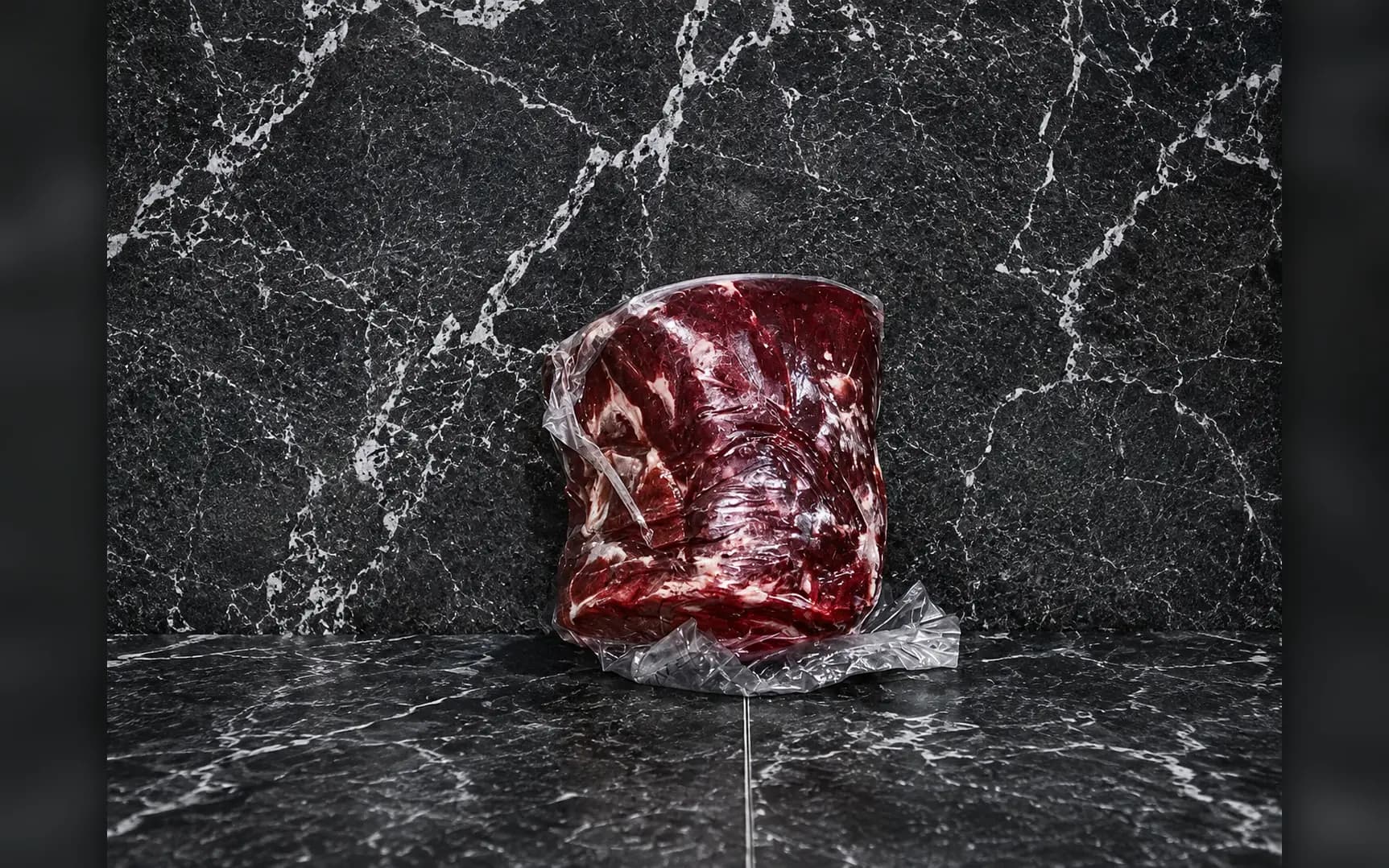
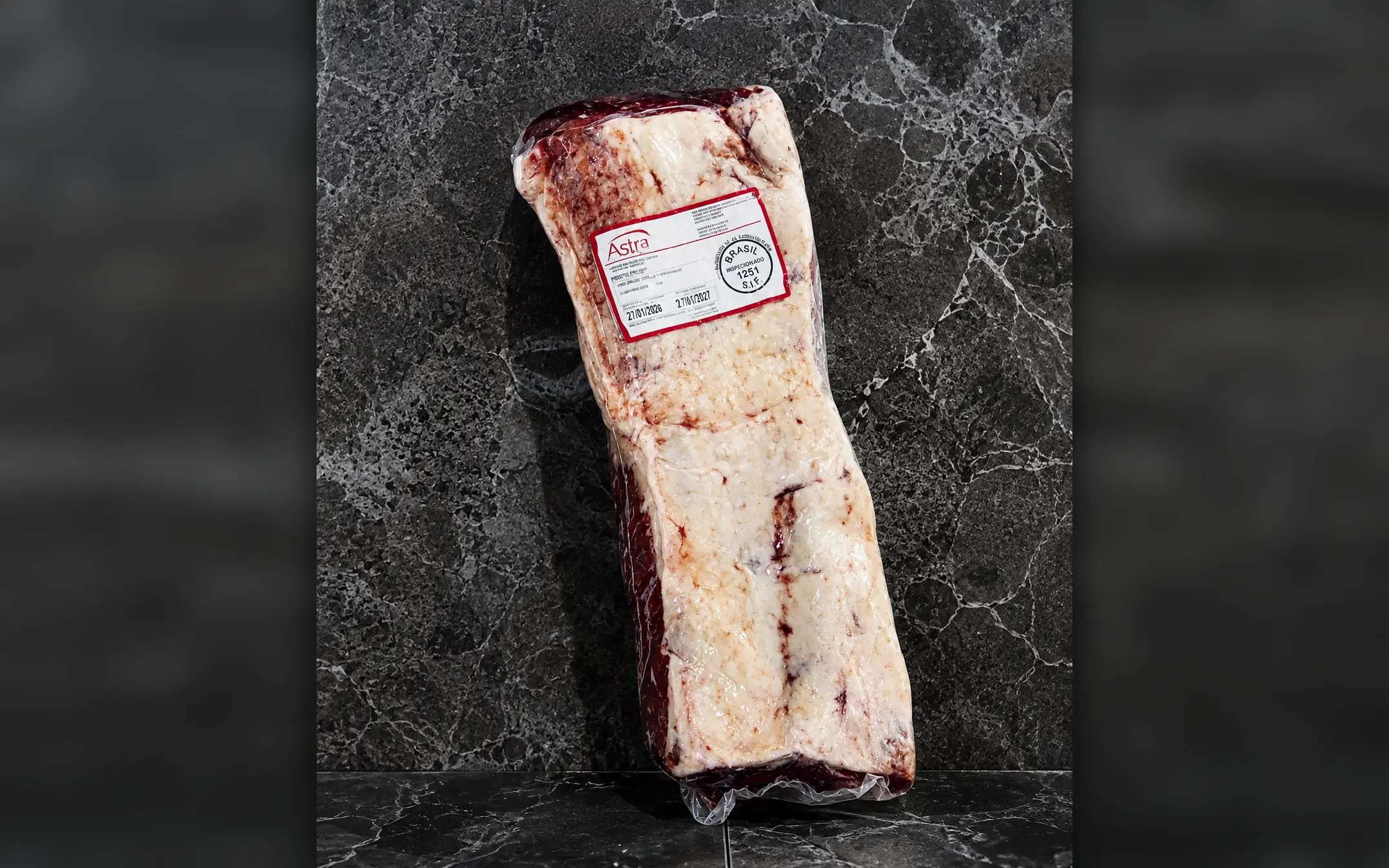
Thaw frozen ribeye in its vacuum bag on the bottom shelf of the fridge at 0–4 °C. It is slow, but the meat loses the least juice and the surface does not dry out. A 2.5–3.5 cm portioned steak typically thaws in 12–24 hours, a 1.2–1.5 kg Astra cut in one to two days, a Frigon cut of up to 3 kg in two to three.
Do not thaw on the counter or under warm water: the surface warms to temperatures where bacteria multiply freely while the centre is still frozen solid. A little juice in the bag after thawing is normal for frozen meat, not a sign of a problem. Thawed meat is never refrozen.
Tempering: 30–60 minutes on the counter
A steak straight from the fridge is around 2–4 °C inside. Put it on the grill immediately and you get a crust on the outside with a wide grey band and a cold centre beneath it. Let the meat stand at room temperature for 30–60 minutes depending on thickness, but no longer than an hour: food-service hygiene rules do not allow raw beef to be left out in the warm for long.
Storage at −18 °C and thawing without losing quality is covered in a separate blog article.Storage and thawing →
Trimming and portioning the cut
A whole cut is easier to portion while still slightly frozen: the steaks come out uniform. Trim excess external fat, leaving a 3–5 mm layer to add flavour and protect the edge from drying out. Cut across the primal into steaks 2.5–3.5 cm thick. Anything thinner than 2.5 cm overcooks inside before it has time to build a crust.
- Astra, Nelore breed, 70% grass / 30% grain diet: a 1.2–1.5 kg cut typically yields four to five steaks of 250–300 g. Marbling is more restrained than in Frigon, with a clean beef flavour.
- Frigon, more marbling thanks to Angus genetics: a cut of up to 3 kg in a different format, yielding roughly twice as many steaks. The fat renders over the heat, so this ribeye forgives an extra minute.
- Weigh every portion: it makes yield and food cost easier to control.
Astra and Frigon ribeye: today's price, cut weight and the 5 kg minimum order in the catalogue.Ribeye in the catalogue →
Coarse salt and a dry surface
Pat the steak dry on all sides with paper towel: surface moisture has to evaporate before the Maillard reaction can begin. Salt with coarse salt 10–40 minutes before cooking. In that time the salt dissolves, the meat releases a little juice and draws it back in, now seasoned. Pat dry once more before it goes on the heat.
Add ground pepper after cooking or in the last minute: on hot cast iron it burns and turns bitter. Oil is only needed for the pan; the steak goes on the grill dry.
Ribeye on the grill
Heat the grill to 250–300 °C: a hand held over the grate should last no more than two seconds. Scrape the grate clean and oil it with a folded cloth.
- Lay the steak down and leave it untouched for 2–3 minutes until a crust forms.
- Turn it and give it another 2–3 minutes. For cross-hatch grill marks, rotate the steak 45° halfway through each side.
- Stand the steak on its thick fat edge for 30–60 seconds, holding it with tongs.
- Check with a thermometer: a 2.5–3 cm steak reaches medium rare in roughly 6–8 minutes, but temperature is the guide, not time.
- If the fat flares up, move the steak to a cooler zone and let it finish there.
Ribeye in a cast-iron pan with butter and thyme
Cast iron holds heat, so it does not lose temperature when the steak goes in. Heat it until it just starts to smoke, then add a tablespoon of high-smoke-point oil: refined sunflower or grapeseed.
- Sear the steak for 2 minutes per side, without moving it for the first few seconds.
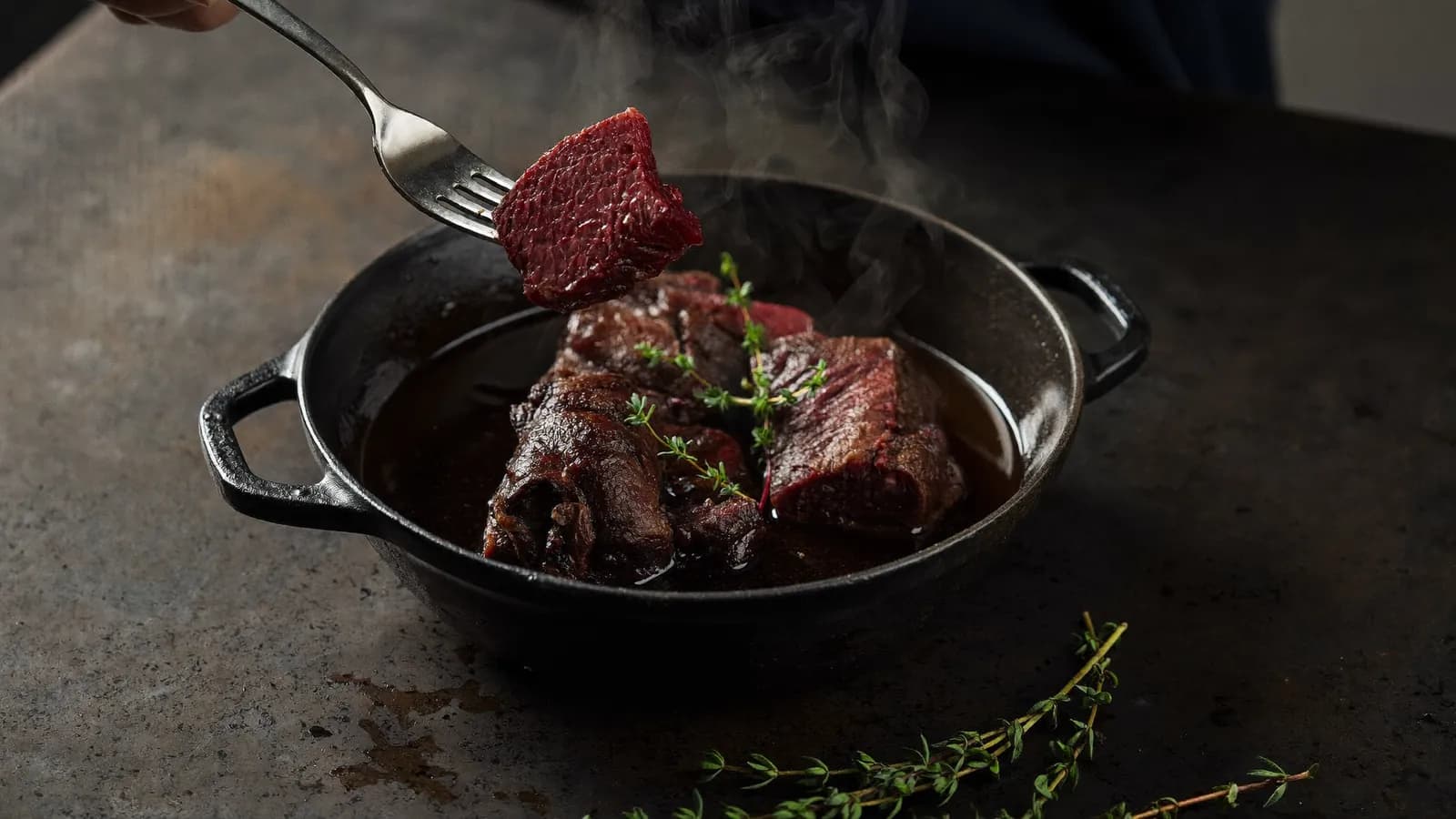
- Reduce the heat to medium and add 30–40 g of butter, 2–3 sprigs of thyme and a crushed clove of garlic.
- Tilt the pan and baste the steak with the butter for 1–2 minutes, turning it every 30 seconds.
- Pull it at the temperature in the table below: the cast iron and the resting period will carry the meat to target.
Butter goes in only once the crust has formed, otherwise it burns before the meat has browned. Run the extraction on full: ribeye on cast iron smokes noticeably.
Reverse sear for steaks from 3.5 cm
A thick steak over direct heat cannot warm through inside before the outside overcooks. Reverse sear reverses the order: slow cooking first, then a quick crust. For a restaurant the method has a further advantage: the first stage can be done ahead, in a quiet period.
- Place the salted steak on a rack over a tray and put it in the oven at 100–120 °C.
- Bring it to an internal temperature 10–12 °C below target: 43–45 °C for medium rare. A 4 cm steak typically takes 35–50 minutes.
- Let it stand for 5–10 minutes while the cast iron or grill heats to maximum.
- Sear for 45–60 seconds per side and along the edges. No long rest is needed afterwards: 2–3 minutes is enough.
The crust after reverse sear is more even, and the grey band beneath it is minimal, because the meat warmed through gradually.
Internal temperatures by degree of doneness
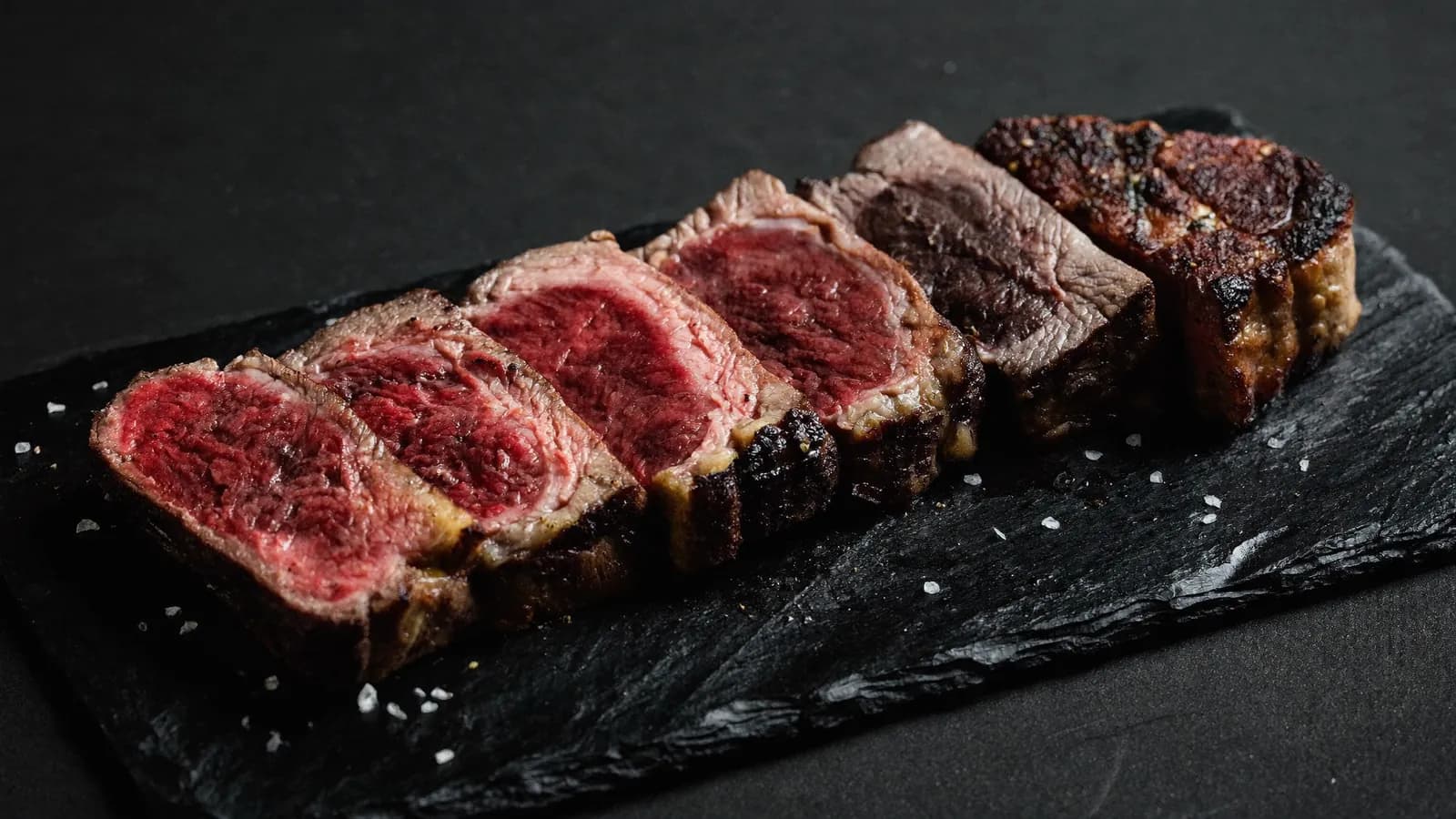
The only reliable method is a probe thermometer in the thickest part, away from the large seams of fat. Pull the steak off the heat a few degrees early: the internal temperature keeps rising while it rests.
| Doneness | Pull from heat | After resting | Cut surface |
|---|---|---|---|
| Rare | 47–49 °C | 50–52 °C | red, barely warm centre |
| Medium rare | 51–53 °C | 55–57 °C | pinkish red, warm |
| Medium | 56–58 °C | 60–63 °C | pink centre |
| Medium well | 61–63 °C | 65–68 °C | barely pink |
| Well done | 67–69 °C | 71 °C and above | no pink |
For a ribeye with pronounced marbling, such as Frigon, medium rare and medium are optimal: the intramuscular fat has time to render and deliver juiciness. Going below medium is the chef's call, subject to the venue's internal rules.
Ribeye or striploin for the menu: marbling, cut weight, price per kilogram and portion yield in a side-by-side comparison of the two cuts.Ribeye or striploin →
Resting and slicing against the grain
Off the heat, move the steak to a warm plate or board and let it rest for 5–8 minutes: closer to five for a thinner steak, up to eight for a thick one. Fibres tightened by the heat relax and hold the juice; cut straight away and it runs onto the board. Do not cover tightly with foil, or the crust goes soft.
Serve whole or in 1–1.5 cm slices across the grain. A ribeye has two parts, the central “eye” and the marbled “cap” along the edge, and the grain runs in different directions in each, so it is easier to remove the cap and slice it separately.
Terms for restaurants and steakhouses: ribeye and striploin in batches from 5 kg, today's price list, Nova Poshta delivery across Ukraine.Terms for restaurants →