For business
Documents for an imported beef batch: what restaurants and meat plants should receive
International certificate, labelling, specification, invoice and consignment note: what to check when receiving beef, whether a veterinary certificate is.
5 min read · updated · MYASYA team

A batch of imported beef should arrive at the kitchen or the plant with three layers of documents. The first is the import layer: the international veterinary certificate from the exporting country, the producer's label on every pack and the batch specification. The second is domestic: proof that the batch entered Ukraine legally and is moving between registered food business operators; a separate veterinary certificate for food products is, as a rule, not required here. The third is accounting: the invoice, the delivery note and the consignment note. Together they answer the two questions any HACCP inspection asks: where did this meat come from, and can you prove its route.
The import layer: certificate, labelling, specification
The international veterinary certificate is issued by the competent authority of the exporting country for a specific batch. It normally states the producer and its registration number, the type of product, quantity, date and means of transport, and attests that the meat was obtained from healthy animals at an establishment approved to export to Ukraine. The original travels with the cargo and is checked at the border; the importer keeps it on file. A restaurant or meat plant should hold a copy, or at least the certificate number and the batch number, so the chain can be traced back to the producer when needed.
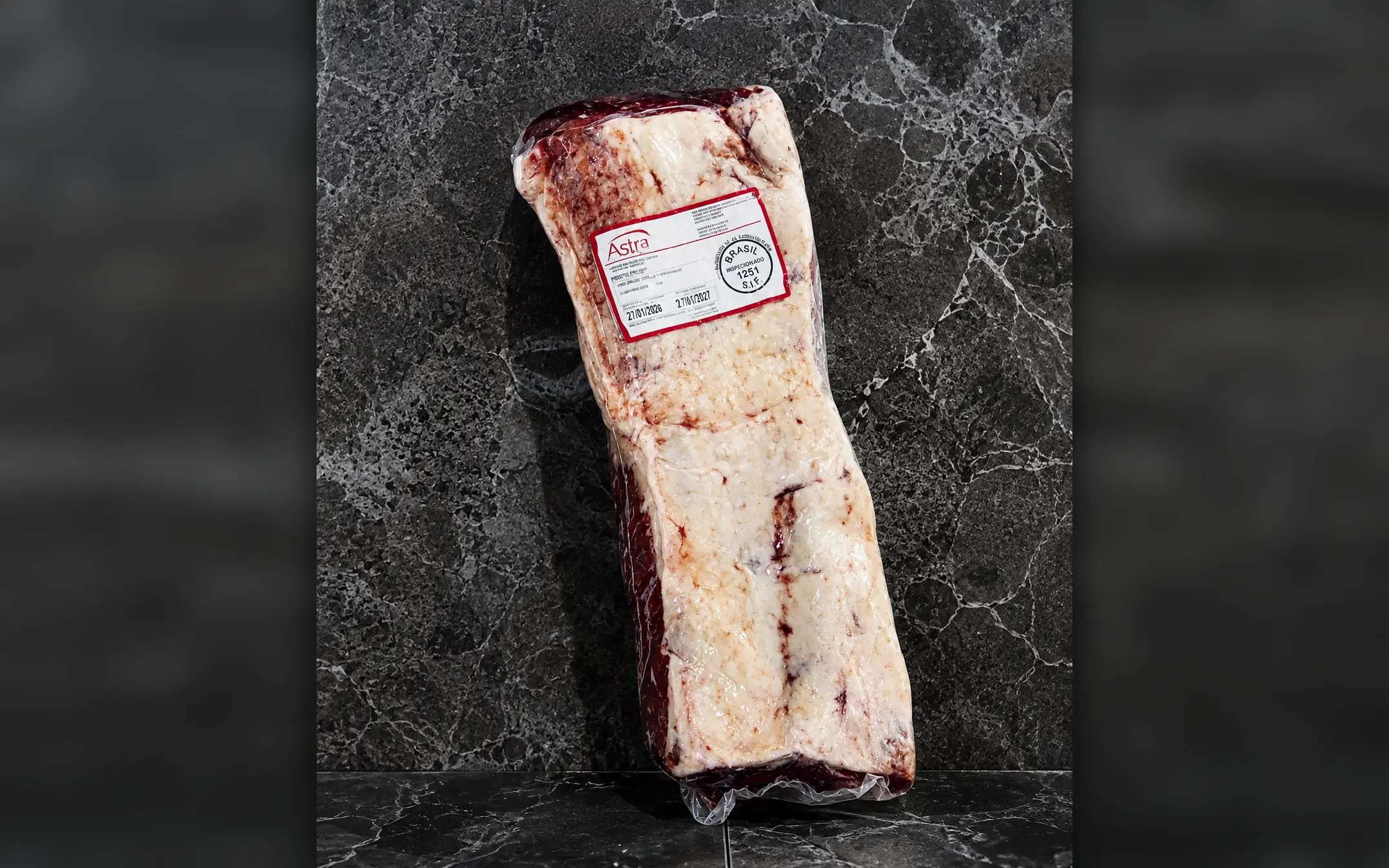
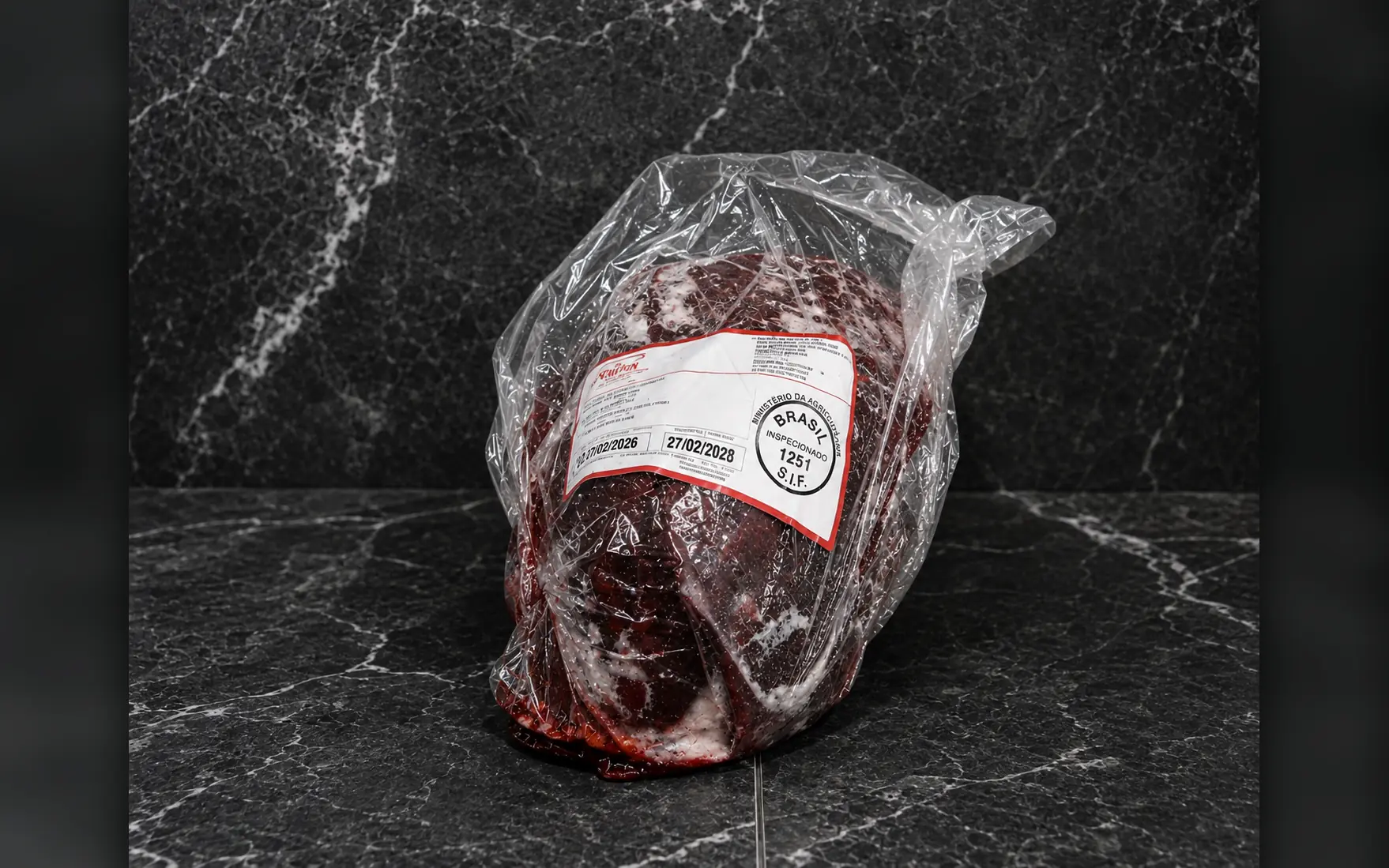
The producer's label is the sticker on every vacuum pack or carton box. It usually shows the cut name, the name and registration number of the producing establishment, country of origin, production or freezing date, best-before date, storage conditions, net weight and batch number. That number is what links the batch to the certificate and the delivery note, so do not tear the label off when you open the carton: photograph it or keep it.
The specification, or packing list, describes the batch package by package: how many cartons, at what weight, under which lot numbers. It is what you reconcile the delivery against: everything that arrived is in the documents, and everything in the documents arrived.
| Document | Issued by | What it confirms | Why you need it |
|---|---|---|---|
| International veterinary certificate | Competent authority of the exporting country | Origin, safety, the producer's approval to export | Certificate number in the batch file |
| Producer's label | Producing establishment | Date, best-before date, batch number, weight | The key to traceability |
| Specification, packing list | Producer or importer | Number of packages, weight, lot numbers | Reconciliation with what arrived and with the delivery note |
| Veterinary certificate for movement | Regional office of the State Service of Ukraine on Food Safety and Consumer Protection | Covers animals and other goods subject to veterinary control; for food for human consumption moving within Ukraine it is, as a rule, not issued | Check whether it applies to your case |
| Invoice, delivery note, consignment note | Supplier, carrier | Payment, handover, transport | Accounting and tax |
Veterinary certificate for meat: is one needed within Ukraine
Many buyers still expect a Form No. 2 veterinary certificate with every batch and are surprised when there is none. Under the current procedure for issuing veterinary documents, certificates for movement within Ukraine cover animals and other goods subject to veterinary control, while food products of animal origin for human consumption are exempt from that requirement. So, as a rule, no separate certificate is issued for a batch of frozen beef travelling from the importer to a restaurant or processor.
The batch's legal status is then confirmed by other documents: the international certificate and border control records in the importer's file, the producer's label on every package and the supplier's delivery note, which together let you trace the batch in both directions. If an inspector or your internal audit asks for something more, do not argue on the spot; check with the regional office of the State Service of Ukraine on Food Safety and Consumer Protection and ask the supplier exactly what they can provide. If the batch ships by Nova Poshta or another carrier, agree in advance how you will receive the documents: originals with the cargo or copies sent separately.
Accounting documents: invoice, delivery note, consignment note
The invoice is the basis for payment: line items, weight, price per kilogram and total. On our invoice, weighing the batch changes the weight and the total, while the price per kilogram stays the one from your order. The delivery note records the handover of goods from the supplier to you and must match the weight actually accepted, so it is signed after weighing, not before. The consignment note (TTN) normally accompanies a batch travelling by road; when the batch ships through a parcel carrier, the express waybill takes its place.
- Invoice: details of both parties, item names as in the supplier's price list, weight, price, total.
- Delivery note: weight matching what was accepted, date, signatures of both parties.
- Consignment note or express waybill: carrier, vehicle or shipment number, temperature conditions if the carrier records them.
- For legal entities, a contract if you work with deferred payment or regular deliveries.
How we ship batches: Nova Poshta across Ukraine from a single carton box, or pickup from our warehouse in Mykolaiv. Storage at −18 °C, cuts vacuum-packed.Delivery and payment →
Receiving a batch: what to check before signing the delivery note
Paperwork is half of receiving. The other half is the physical check, and its records are what a HACCP audit most often asks to see. Do it before the driver leaves and before the delivery note is signed.
- Temperature. Frozen beef should arrive at no warmer than −18 °C in the core of the product. Measure between packs or at a control point and record the reading in the receiving log. The only deviations allowed during transfer are those written into your own procedures.
- Vacuum integrity. The pack should sit tight against the cut. Air inside, torn film, frost or ice crystals under the film are reasons to set the pack aside and record it in a discrepancy report.
- Labelling. Every package carries the producer's label with the date, best-before date and batch number; the number must match the specification and the delivery note.
- Weight. Weigh the batch or a sample of packages and compare with the delivery note. Any difference beyond the tolerance agreed with the supplier goes into a discrepancy report before you sign.
- Document set. Delivery note, specification, copy or number of the certificate: all present.
How to keep meat batch documents for HACCP
Food safety law requires a food business operator to maintain "one step back, one step forward" traceability: you must be able to say who you received each batch from and where it went. The simplest way to do that is one file per batch, paper or digital, holding everything together: a copy of the certificate or its number, the delivery note, the specification, photos of the labels and the entry from the receiving log.
Keep the file at least until the end of the batch's shelf life, and in practice longer: inspections and claims arrive with a lag. Scanned copies on a shared drive, named by batch number and date, are a lifesaver when the original is at another site. In the receiving log, one line per batch: date, supplier, product, batch number, temperature, weight, who received it.
For restaurants and steakhouses: ribeye, striploin and tenderloin (filet mignon) in batches from 5 kg, documents with every batch.For restaurants →
Checklist: meat batch documents for restaurants and meat plants
- Number or copy of the international veterinary certificate.
- Batch specification with lot numbers and weight per package.
- Producer's label on every package, photographed or kept.
- Invoice, delivery note, consignment note or express waybill.
- Veterinary certificate only if your case requires one; for food products within Ukraine, as a rule, it does not.
- Temperature recorded in the receiving log.
- Discrepancy report if weight or condition does not match the documents.
- Batch file kept until the end of shelf life and beyond.
Catalogue with today's prices: steaks, offal and raw material for processing.Open the catalogue →