For business
How to Choose a Beef Supplier for a Restaurant: 9 Questions Before the First Batch
Checklist for chefs and buyers: the producing plant, documents with every batch, −18 °C in transit, batches from 5 kg, cost per portion rather than per kg.
5 min read · updated · MYASYA team
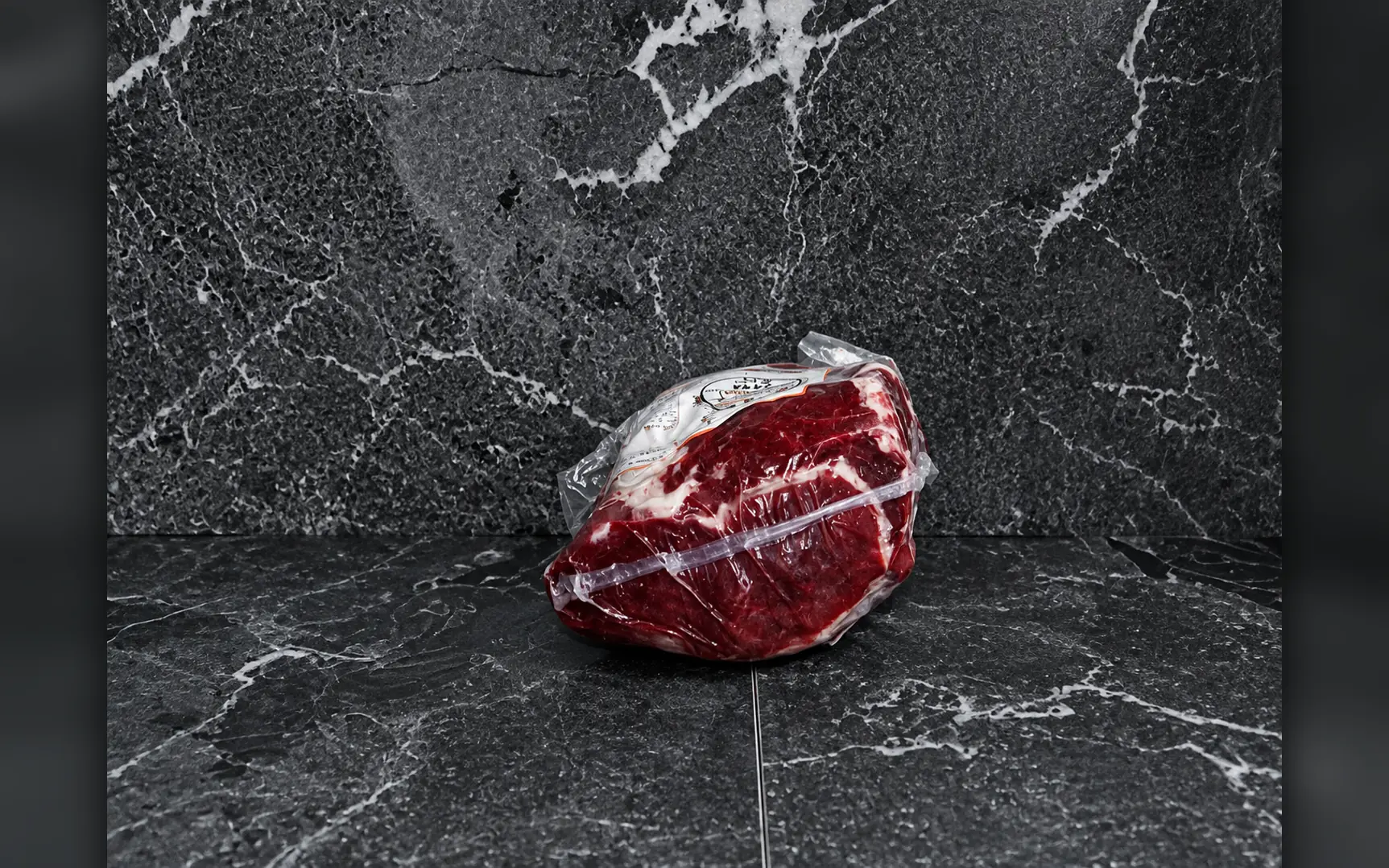
You choose a beef supplier for a restaurant not by the lowest figure on the price list but by the answers to nine questions: who the producer is, which documents travel with each batch, how the temperature is held in transit, what the minimum order is, what a portion costs rather than a kilo, whether a trial batch is possible, what the payment terms are, whether there is a current price list you can see without calling, and what happens if something is wrong with a batch. If the supplier answers half of them with “I'll check and get back to you”, proceed with caution.
Beef is usually the most expensive line in a steakhouse's purchasing, so the wrong supplier costs more than money. It means inconsistent doneness on the same dish, portions spoiled after thawing, and a guest who does not come back. Below is a checklist for the first conversation, with notes on which answers count as normal.
1. Origin and producer: do they name the plant
The first question is where exactly the meat comes from. “Brazil” or “South America” is not an answer in itself: one country has dozens of plants, and they differ in breed, feeding, trimming and cut format. A good supplier names the plant, the breed and the feeding regime without pausing. If the producer's name is “not disclosed”, the meat was most likely bought through an intermediary, and the next batch may be different.
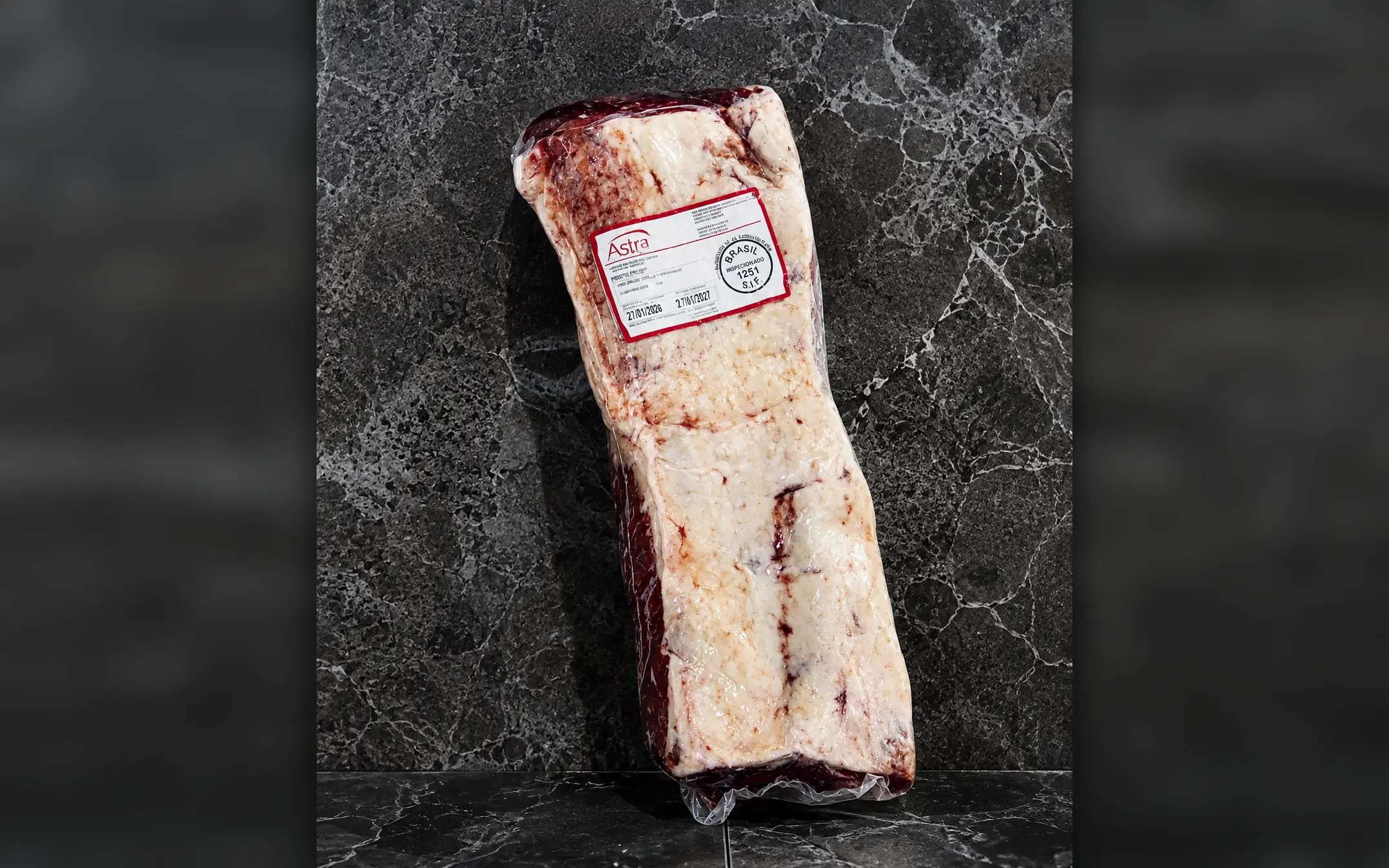
We import beef from Brazil directly, by container, with no intermediaries, and we name both producers openly. Astra Foods: Nelore breed, fed 70 % grass / 30 % grain. Frigon: more marbling from Angus crossbreeding, and a different cut format. For the kitchen this means one simple thing: with the same plant, a ribeye in March looks the same as a ribeye in November.
2. Documents with every batch
The second question is which documents come with each batch and whether you will have to chase them. Raw-material documents are exactly what gets checked when your premises are inspected, so “we'll send them if needed” is a poor answer. Ask, too, whether the supplier itself is certified under a food safety management system: it is a sign that the warehouse, records and batches are run properly rather than by rule of thumb.
Our documents go with every batch, and the company is certified to DSTU ISO 22000:2019. Legal entities receive a full set of documents with every shipment.
3. Temperature control and how the meat travels
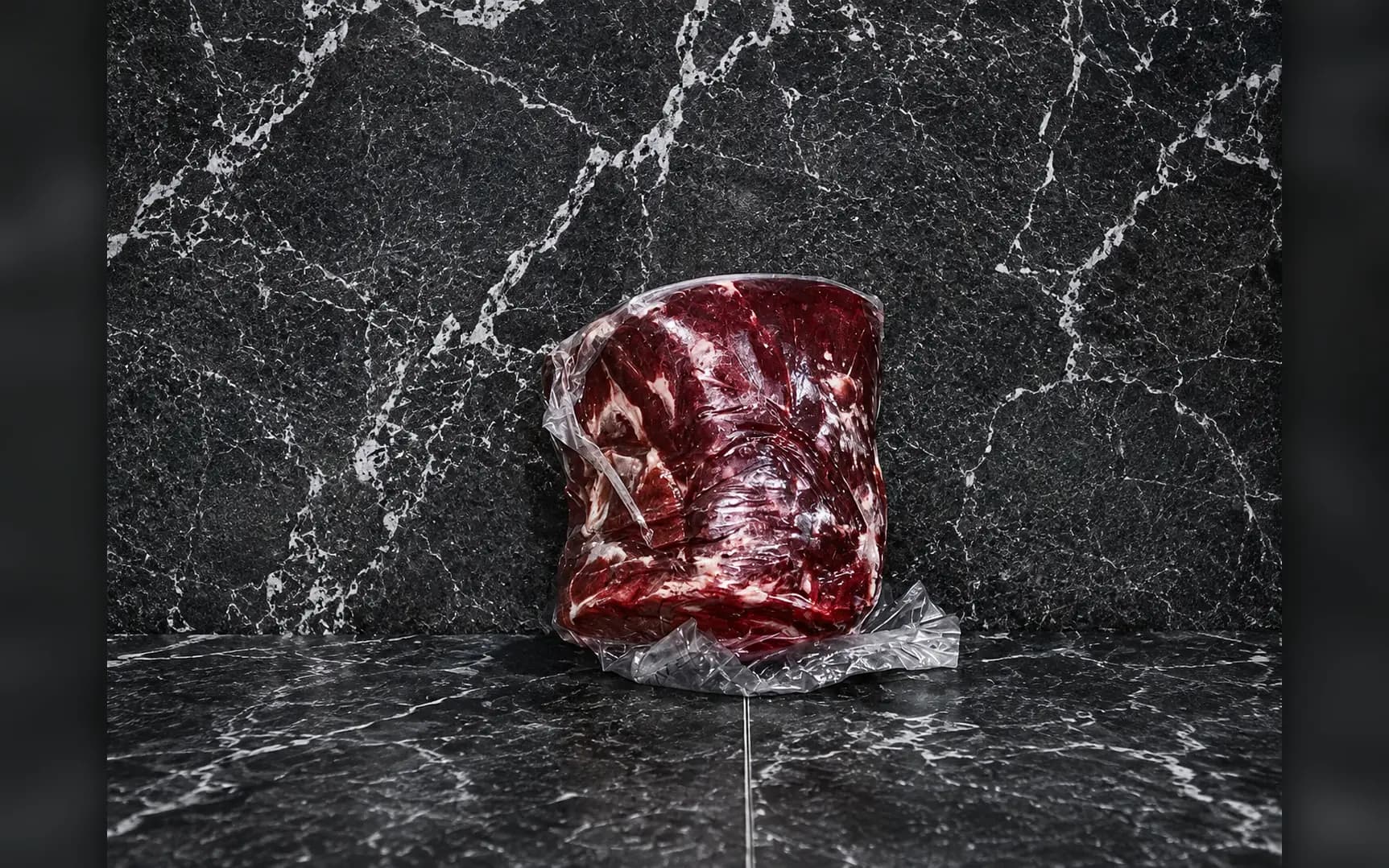
Frozen beef has to stay at −18 °C from the plant to your freezer, and any break in that chain shows up in the kitchen: frost inside the vacuum pack, ice crystals between the meat and the film, a deformed bag. So the question is not “do you have a reefer” but who actually controls the cold chain: the supplier itself, or subcontractors nobody has ever seen.
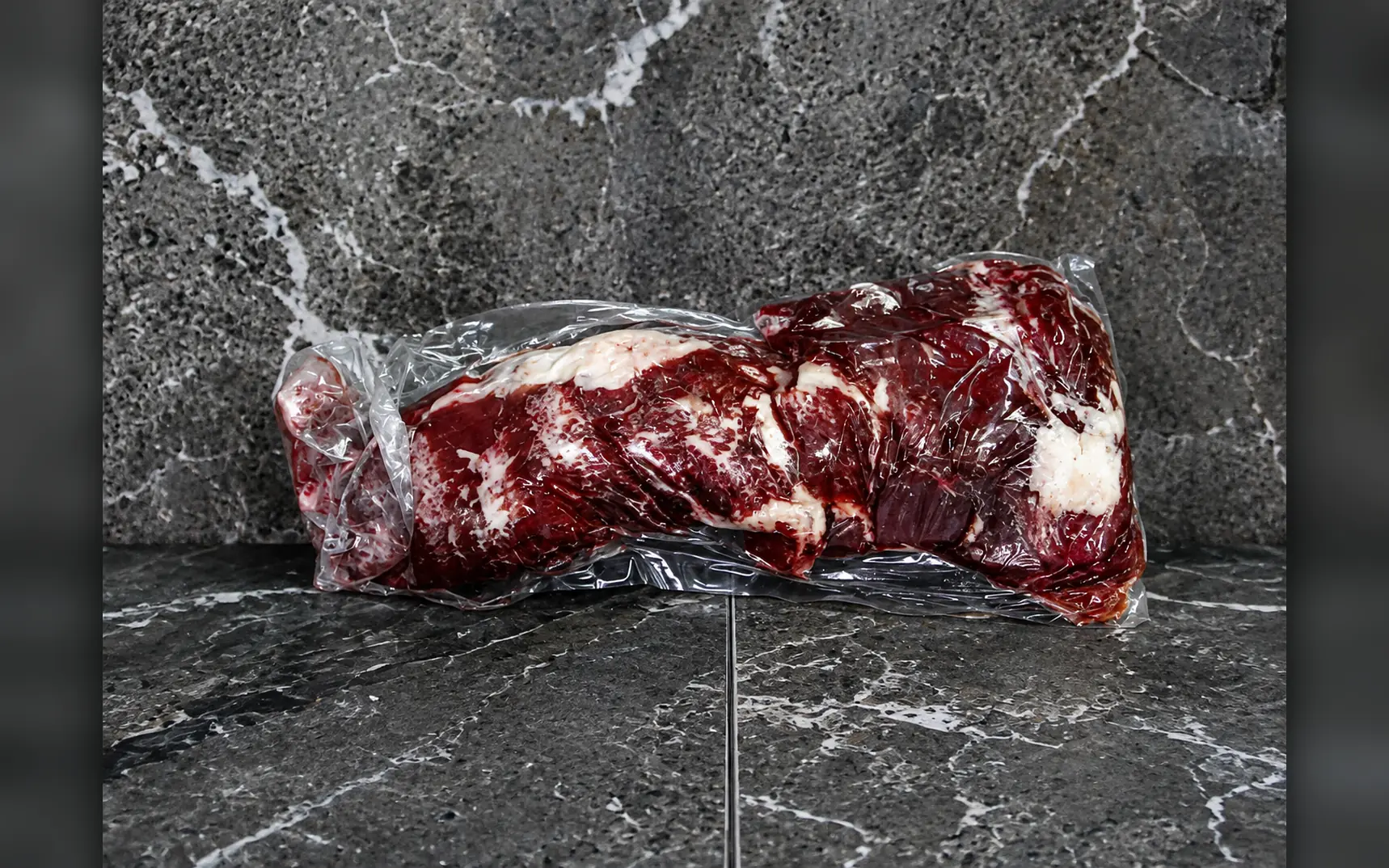
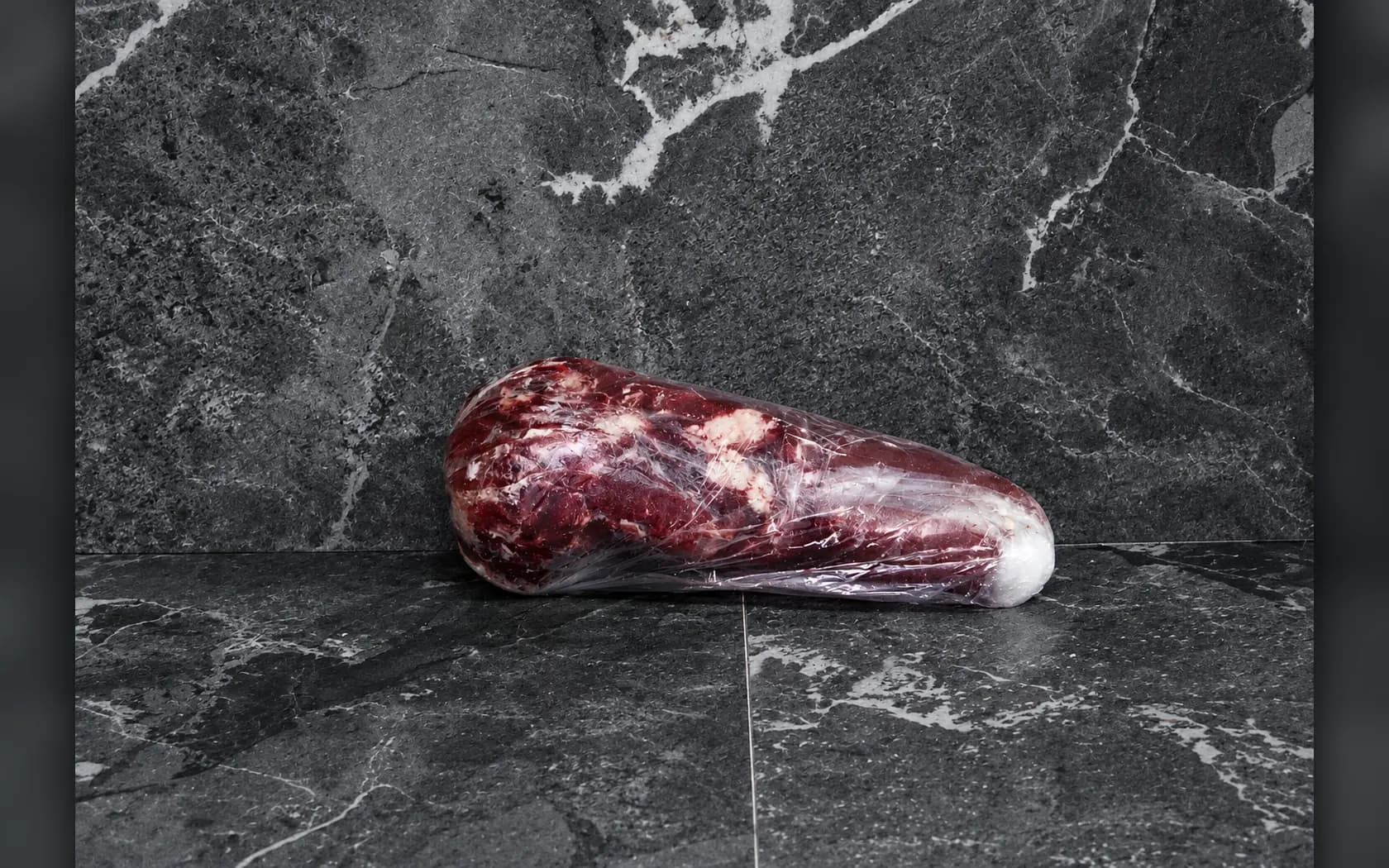
We control the cold chain ourselves: all beef is frozen and stored at −18 °C. Cuts and tongue are vacuum-packed, liver comes in cartons or vacuum packs, trimmings in carton boxes. Delivery by Nova Poshta across Ukraine, or pickup from our warehouse in Mykolaiv, 2 Omelianovycha-Pavlenka St., Mon–Fri 10:00–18:00.
4. Minimum order and range consistency
For a restaurant, the minimum order often matters more than the price per kilo. If a supplier ships only by the pallet, you tie up cash and freezer space, and the menu ends up following the stock rather than the other way round. Ask what the minimum is per item, whether items can be mixed in one shipment, and whether the same item will still be there in three months. For comparison, here is our current range.
| Item | Producer | Cut weight | Minimum order | Price, ₴/kg |
|---|---|---|---|---|
| Ribeye | Astra / Frigon | 1.2–1.5 kg / up to 3 kg | 5 kg | 789 / 695 |
| Striploin | Astra / Frigon | 4.5–5.5 kg / 3.5–4 kg | 5 kg | 598 / 620 |
| Tenderloin (filet mignon) | Astra | 1.5–2.7 kg | 5 kg | 960 |
| Beef tongue | Astra / Frigon | 1–1.5 kg / 600–800 g | 10 kg | 320 |
| Beef cheeks | Frigon | — | 20 kg | 300, on request |
The prices above are today's. Once you order, the price per kilogram is locked in, and we confirm the total after we weigh the batch. We ship steak cuts from 5 kg, and Nova Poshta delivers from a single box, so a trial batch does not need a freezer of its own.
5. Price per kilo or cost per portion
A cheaper kilo often means a more expensive portion. Work out the portion cost with a simple formula: price per kg ÷ yield after trimming × portion weight. If ribeye costs 789 ₴/kg and, say, 85 % remains after trimming, a 300 g portion comes to roughly 278 ₴. A cut with a thicker fat cap at 650 ₴ can end up costing more on the plate.
This is where the cut format shows. An Astra ribeye weighs 1.2–1.5 kg, a Frigon one up to 3 kg: the first gives fewer steaks per cut, the second more portions of the same shape. Ask not just the price but also the cut weight and the thickness of the fat cap.
6. Sample or trial batch
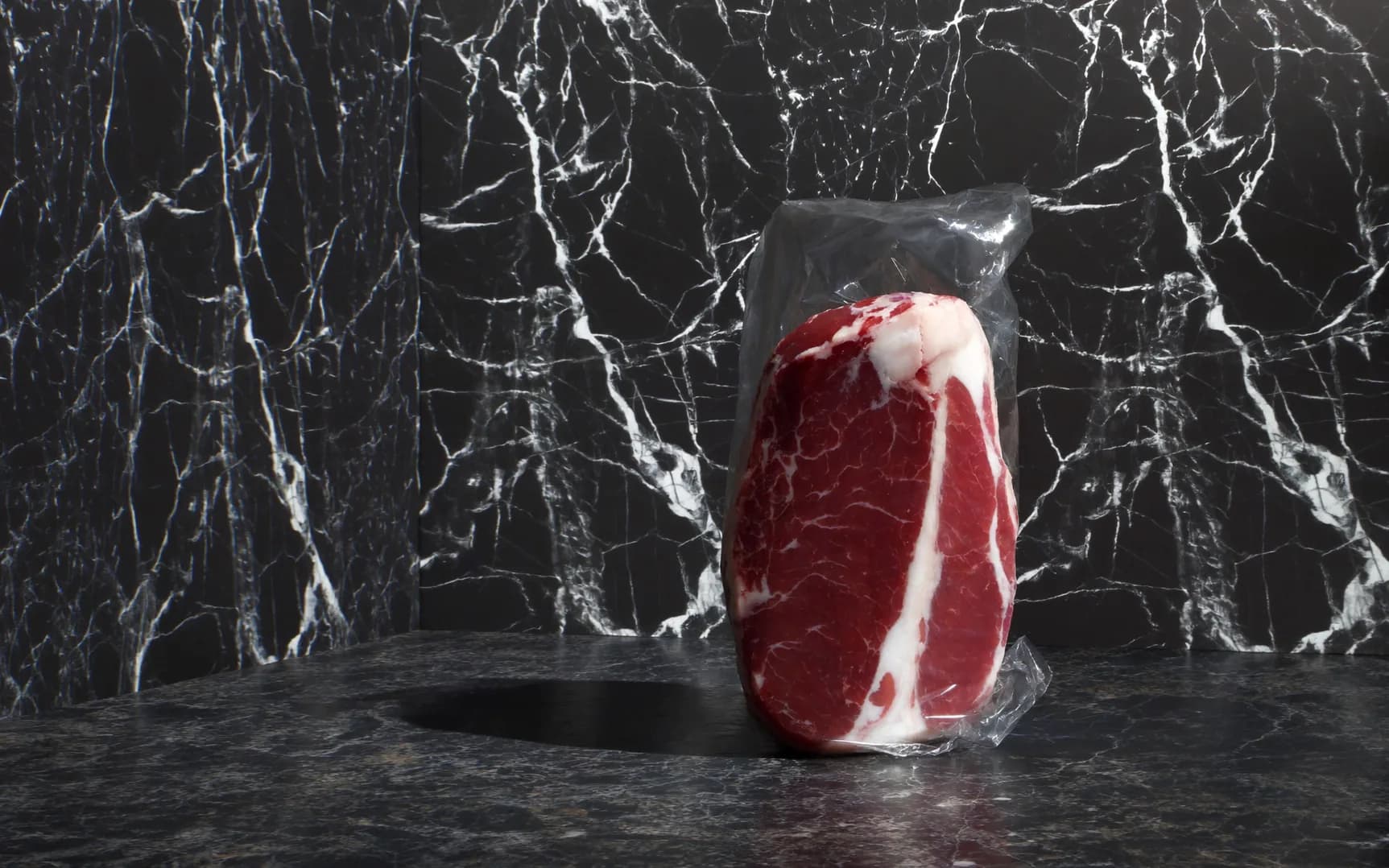
Do not sign long-term agreements before a trial batch. For steaks the minimum order is enough: 5 kg of ribeye is three or four Astra cuts, enough for two or three services. What to check: colour and smell after defrosting, weight loss on thawing, marbling in the cross-section, weight against the delivery note, and how cleanly the cut is trimmed.
If a supplier refuses a trial batch, or offers a “sample” only in exchange for a commitment to a large order, that is an answer too.
Terms for restaurants and steakhouses: batches, documents, how to order.For restaurants →
7. Payment terms and deferred payment
Sort out the money before the first invoice. Ask whether prepayment is required and how much, whether cash on delivery is possible, on what terms deferred payment is offered, and whether documents are issued to a legal entity. Deferred payment from the first batch is rare, and that is normal: the supplier is checking you too.
Our terms: 100 % prepayment by bank transfer; a full set of documents for legal entities; cash on delivery by arrangement; deferred payment by agreement for regular customers.
How we ship, where to collect and how payment works.Delivery and payment →
8. Response time, and a price list without a call
In a kitchen there is no time to phone around for a price. Ask whether there is a current price list you can open yourself, whether you can place an order in the evening after service, and how quickly it is confirmed. “Call the manager” means every order will take half an hour.
Our current price list is in the Telegram bot @agrovektoruabot, together with the catalogue, ordering, receipts and order status. The website has the catalogue, prices, cart and ordering. Phone +380 67 995 82 70 if you would rather talk.
9. What to do if there is a claim
This is the question asked least often, and it should be asked before the first batch. Ask how to file a claim, within what period, what is needed (photos, weight, invoice number) and who on the supplier's side handles it. Get the answer in writing, by email or in chat. A supplier who answers this calmly and specifically usually ships batches the same way.
The checklist in brief
- Who the producer is: country, plant, breed, feeding.
- Which documents come with every batch, and whether the supplier is certified.
- Who controls the cold chain, and whether −18 °C is held in transit.
- Minimum order per item, and whether the range is consistent.
- Cost per portion after trimming, not just the price per kilo.
- Whether a trial batch at the minimum order is available.
- Prepayment, cash on delivery, deferred payment, documents for a legal entity.
- Today's price list without a call, and how fast orders are confirmed.
- The claims procedure, in writing, before the first batch.
Questions about a batch, documents or a trial batch: write or call us.Contacts →