Kitchen
Beef tongue in the professional kitchen: how to cook, peel and serve
How long to cook Swiss cut beef tongue (2.5–4 h by weight), peeling after an ice bath, 60–65% yield, portion cost at 320 ₴/kg and six ways to serve it.
5 min read · updated · MYASYA team
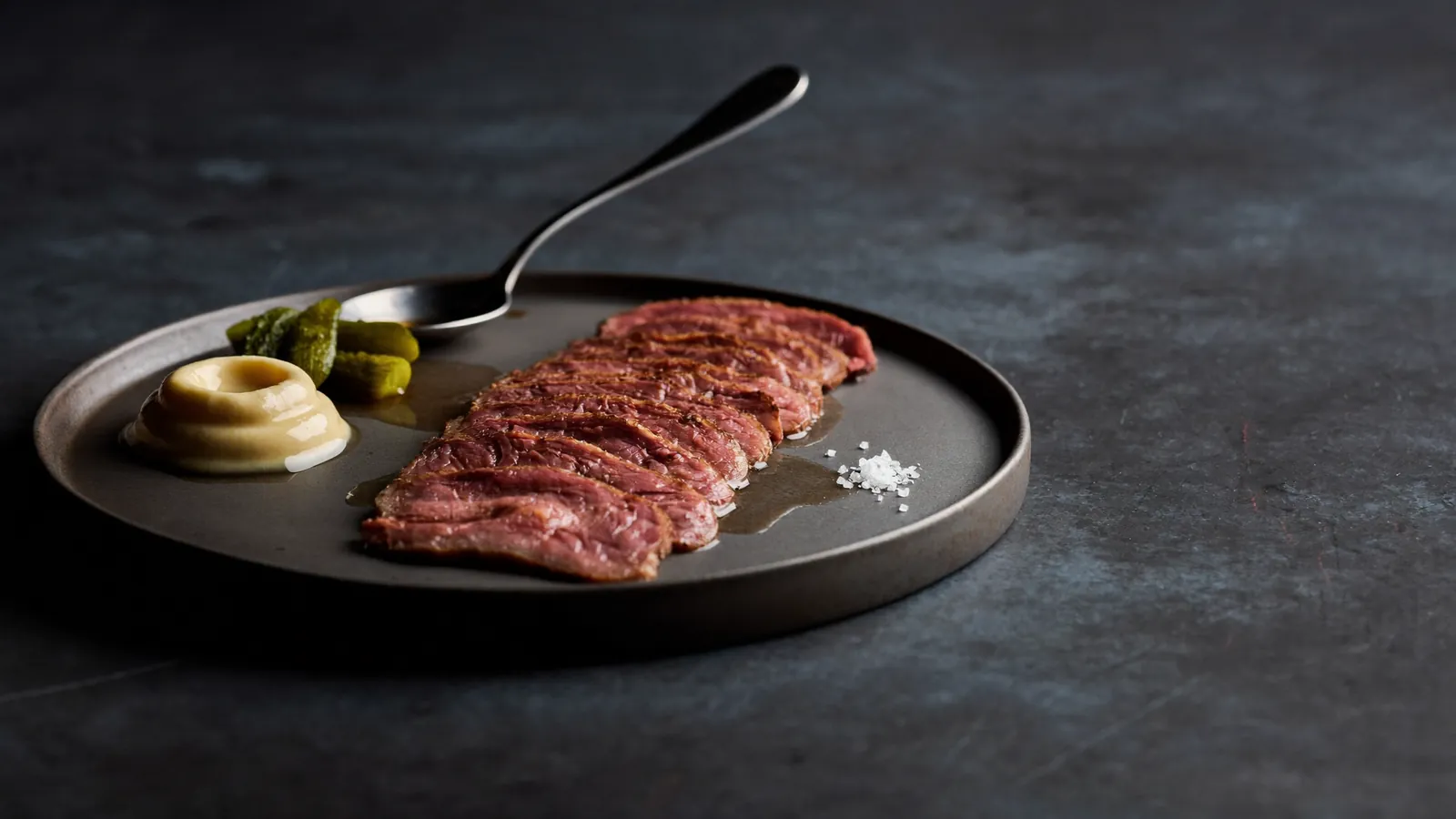
Beef tongue takes 2.5–4 hours to cook depending on weight: roughly 2.5–3 hours for 600–800 g, 3–4 hours for 1–1.5 kg, at a gentle simmer with aromatics, then straight into iced water so the skin comes away easily and in one piece. Our tongue is Swiss cut, with the root end already removed, so it usually needs no further trimming before cooking: thaw, rinse, into the pot. Below is the full process from thawing to the slicer, plus yield and portion cost at today's price.
What Swiss cut means and what exactly arrives in the carton box
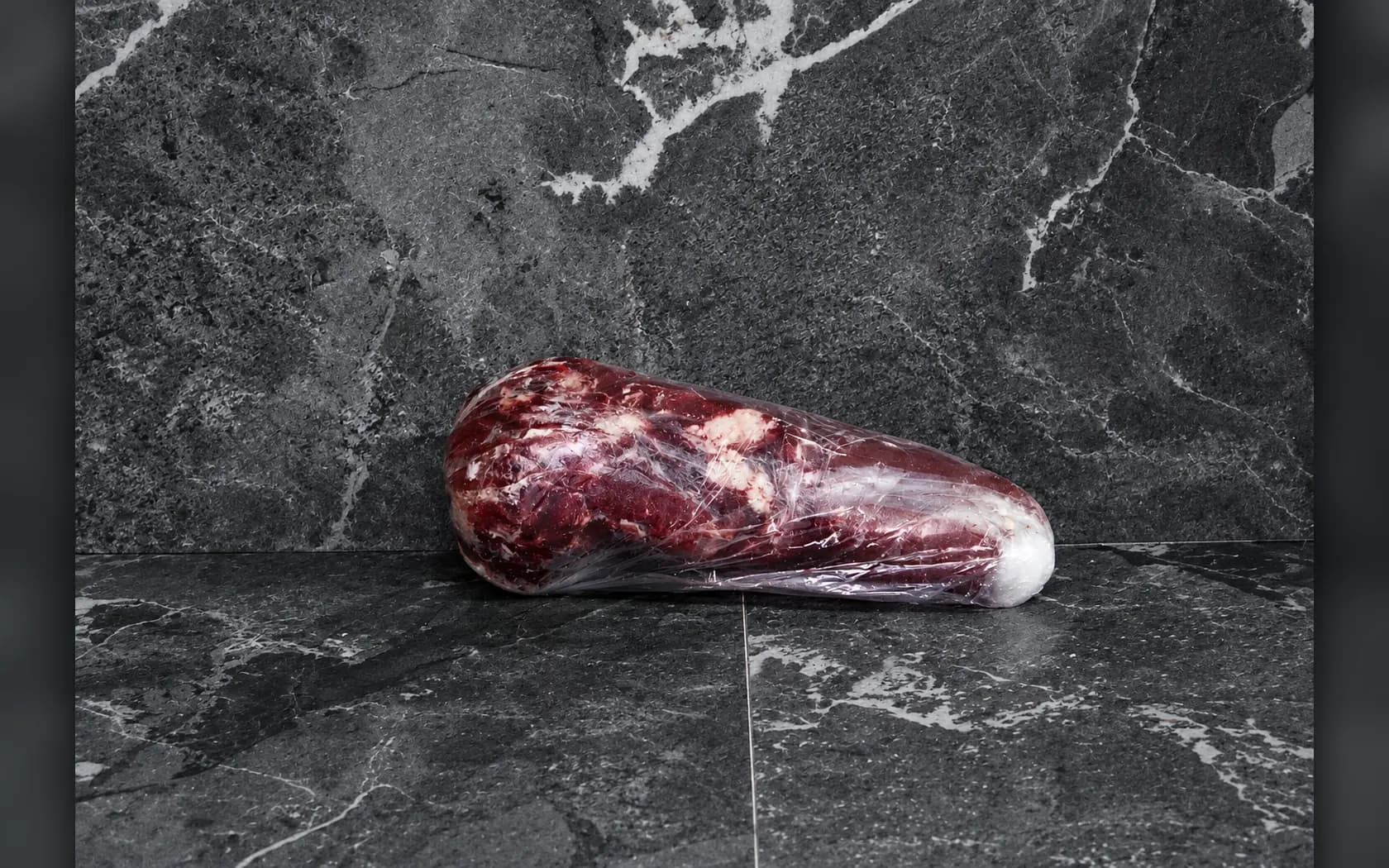
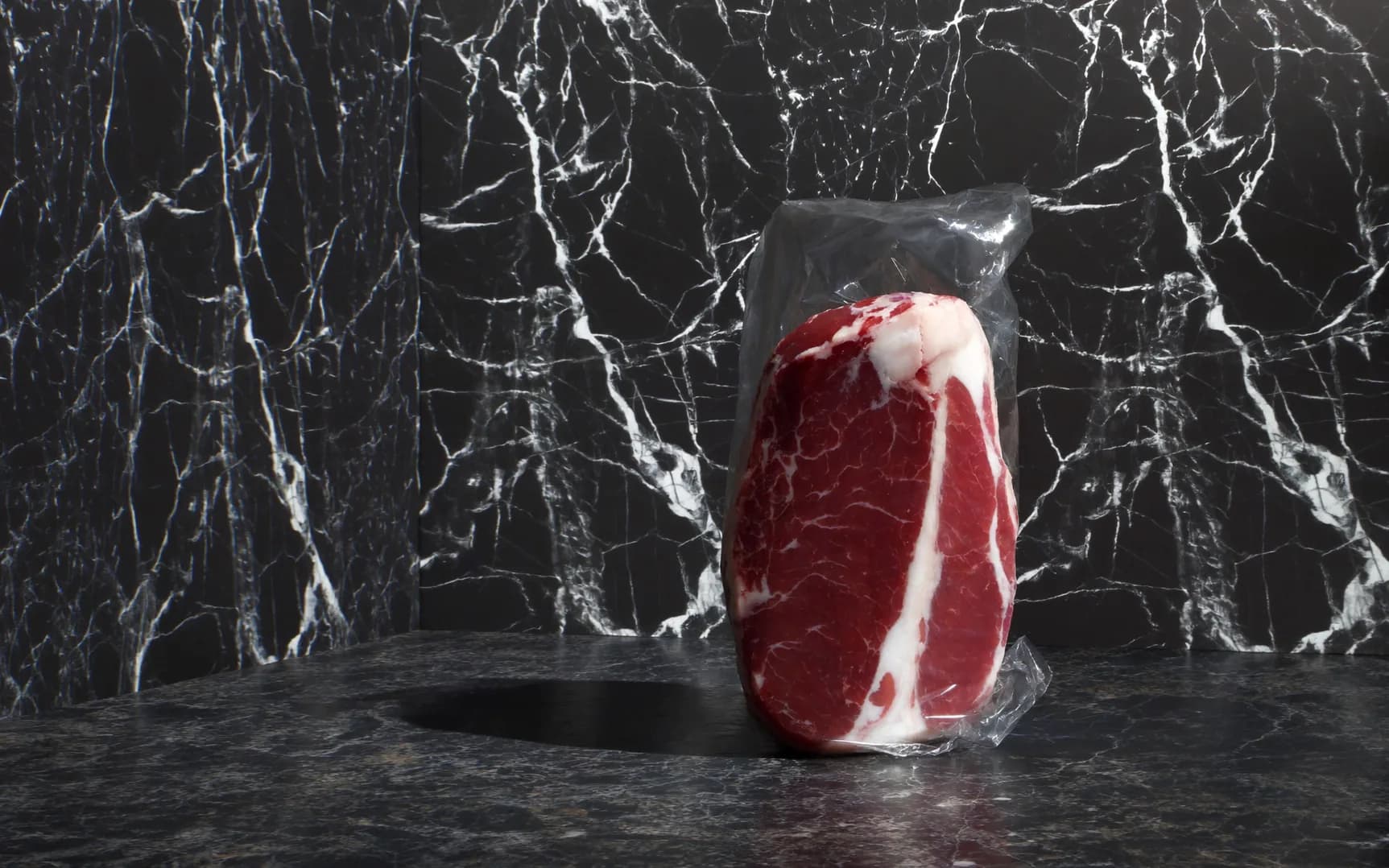
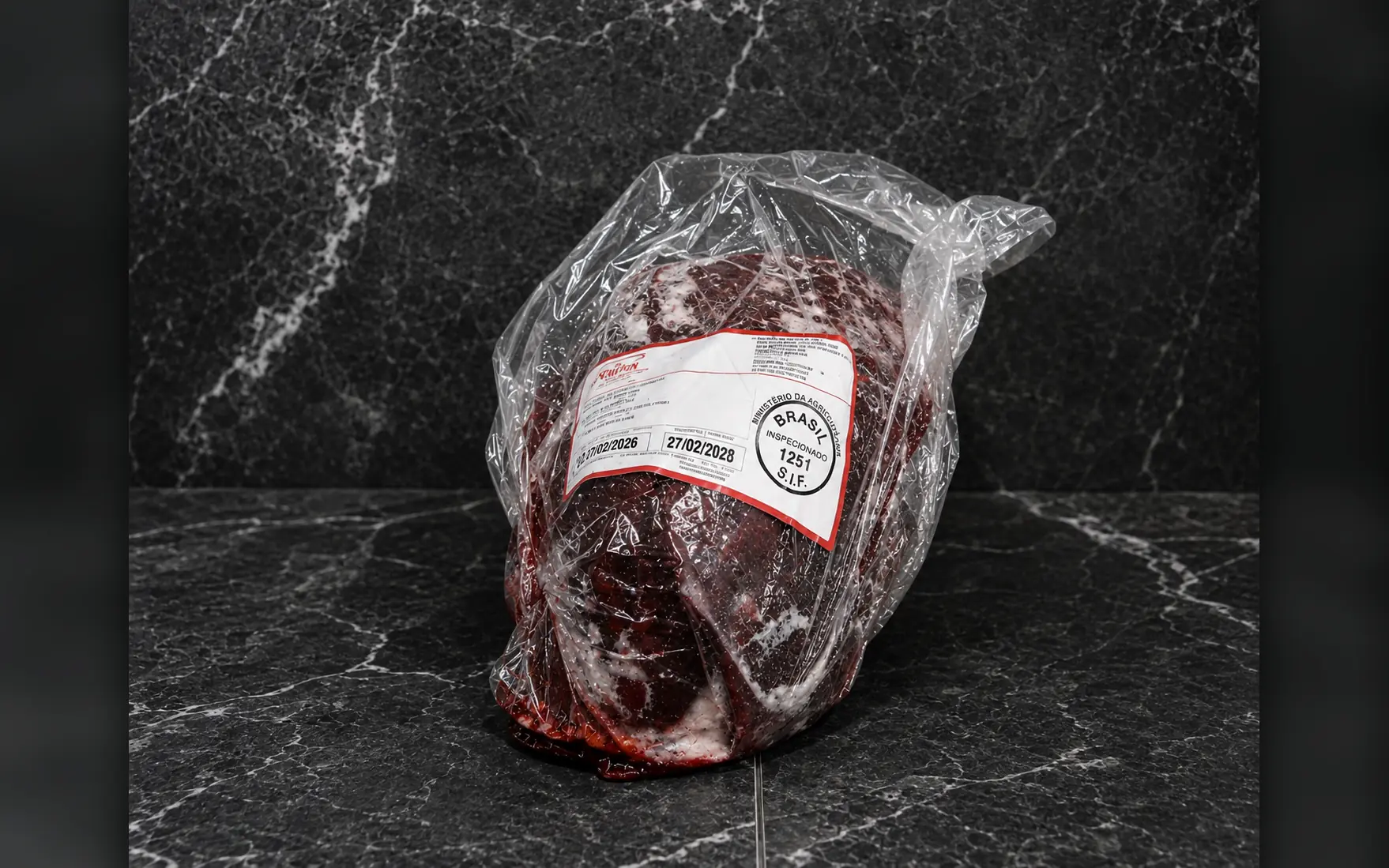
Swiss cut is a tongue with the root end removed: the larynx, salivary glands and fatty base are normally trimmed off at the plant. In the kitchen that means less waste and a predictable yield — you pay for meat, not for what ends up in the bin. The tongue arrives frozen and vacuum-packed; store at −18 °C.
| Producer | Tongue weight | Notes | Best suited to |
|---|---|---|---|
| Astra Foods | 1–1.5 kg | producer's halal certificate, Nelore breed | slices for starters and sandwiches — a long piece with an even cross-section |
| Frigon | 600–800 g | smaller calibre, shorter cooking time | portioned dishes, braising, breading |
A carton box is 20–22 kg, the minimum order is 10 kg, and today's price is 320 ₴/kg. For the cold section, where tongue goes on the slicer, Astra is the easier choice: a long piece with an even cross-section. For the hot section, where tongue gets diced anyway, there is little to choose between them, and Frigon cooks faster.
Swiss cut beef tongue — today's price, weight and availabilityOpen in the catalogue →
Thawing and preparing for cooking
- Thaw in the vacuum pack on the bottom shelf of the fridge at 0–4 °C. A 1–1.5 kg tongue usually takes a day to a day and a half; 600–800 g takes 12–18 hours. Skip warm water: the outer layer goes soft long before the centre has thawed.
- Unpack, rinse under cold running water and scrape off any remaining mucus with the back of a knife or a scraper. There is normally nothing else to trim — the root end is already gone.
- If you like, soak for 30–60 minutes in cold water: the tongue releases residual blood, the stock comes out cleaner and there is less scum.
How long to cook beef tongue, and what to cook it with
Start in cold water, bring to the boil and skim — or discard the first water and cover with fresh boiling water if you need the clearest possible stock. Then hold at a gentle simmer, 90–95 °C, with the lid slightly ajar. A rolling boil gives a tough, rubbery texture and cracked skin.
Add the aromatics once you have skimmed: an onion in its skin, carrot, celeriac or parsley root, bay leaf, black peppercorns and allspice berries, one or two cloves. Salt 30–40 minutes before the end, and go easy: the tongue will go on into sauces, marinades and slices with horseradish, which bring enough salt of their own.
| Tongue weight | Approximate time | How to check |
|---|---|---|
| 600–800 g (Frigon) | 2.5–3 h | a skewer goes into the tip with no resistance |
| 1–1.5 kg (Astra) | 3–4 h | the skin at the tip starts to lift on its own |
| Several tongues in one pot | go by the heaviest, plus 20–30 min | check each one separately |
Combi oven and sous vide
In a combi oven in steam mode at 95–100 °C the timing is generally the same as in a pot, but with no water level to watch. Sous vide takes roughly 24–36 hours at 70–75 °C: the tongue comes out tender right through, and the skin peels the same way — after iced water.
The ice bath and peeling
These are the most important five minutes of the whole process. Using tongs, move the cooked tongue straight from the stock into a container of iced water for 2–3 minutes. The temperature shock loosens the skin from the meat, and it can be pulled off like a stocking: cut near the base, get a grip under the edge and pull towards the tip. Peel while hot — if the tongue cools in its skin, the skin sets and will come off in pieces, taking meat with it.
For cold dishes, return the peeled tongue to the strained stock and cool it there — it will not dry out, and it takes on the flavour of the aromatics. For the slicer, it helps to set the still-hot tongue in a gastronorm tray under a light press: you get an even rectangular block, and the first and last slices do not end up as trim. Food-service regulations require cooked products to be chilled quickly — do not leave the tongue on the stove to "finish" overnight.
Slicing, yield and portion cost
Slice thickness depends on the dish: 1.5–2 mm for a cold starter or tartine, 3–4 mm for a sandwich, 8–10 mm slices for breading, 2–3 cm dice for braising. Chill to 2–4 °C before it goes on the slicer.
Yield after cooking and peeling is roughly 60–65% of the frozen weight. One 1.2 kg Astra tongue gives around 720–780 g of cooked meat; a 20–22 kg carton box gives approximately 12–14 kg. Treat this as a benchmark for comparing menu items, not a standard: the exact yield depends on the batch, the cooking time and how cleanly the skin comes off.
| Dish | Cooked portion | Raw material per portion (estimate) |
|---|---|---|
| Cold starter with horseradish | 80 g | ≈ 41 ₴ |
| Sandwich or tartine | 100 g | ≈ 52 ₴ |
| Breaded tongue | 120 g | ≈ 62 ₴ |
| Braised in sauce | 150 g | ≈ 77 ₴ |
The maths: 320 ₴/kg at a 62% yield works out at around 516 ₴ per kilogram of cooked meat; multiply that by the portion weight. Aromatics, energy and the cook's labour are not included. The price is today's; once you order, the price per kilogram is locked in, and we confirm the total after we weigh the batch.
Beef tongue: restaurant recipes from a single batch
Cook it once and you have five or six menu items. Tongue works as a prep item: cook a batch, chill it, vacuum-pack it — and the cold section, the hot section and the bar have something to build on for several shifts running.
- Cold starter with horseradish — thin slices, horseradish with soured cream or beetroot, pickled red onion.
- Tartine — toasted sourdough, mustard, two or three slices of tongue, pickled cucumber, herbs.
- Sandwich — served warm: 3–4 mm slices heated in a pan, sauerkraut or braised cabbage, a mustard- or horseradish-based sauce.
- Breaded tongue — 8–10 mm slices, flour, egg, breadcrumbs, fried until golden; serve with tartare sauce or lemon.
- Braised in sauce — diced, in a soured-cream and mushroom sauce or a tomato and wine sauce, 30–40 min over a low heat; the tongue is already tender, so it is only the sauce that needs the time.
- Smoked — cooked and peeled tongue, hot-smoked, typically for an hour to an hour and a half; then onto a charcuterie board or into a sandwich in place of ham.
Cheeks, liver and tongue — all offal in one sectionBrowse offal →
Storing cooked tongue
Keep peeled tongue at 0–4 °C — in its stock, under cling film or vacuum-packed; vacuum-packed, it holds moisture longer and does not pick up fridge odours. Shelf life is down to your own kitchen's procedures: as a rule, unpackaged cooked offal keeps no more than a couple of days, and vacuum-packed it keeps longer. Sliced tongue dries out quickly, so slice for the shift, not ahead of time.
Cooked, peeled tongue can be frozen in vacuum-packed portions — once thawed it goes into braises, breading and warm sandwiches; for thin slices, freshly cooked is better. Keep raw frozen tongue at −18 °C in the original vacuum pack, within the producer's shelf life.
Terms for restaurants: Nova Poshta from a single carton box, documents with every batchHoReCa terms →